
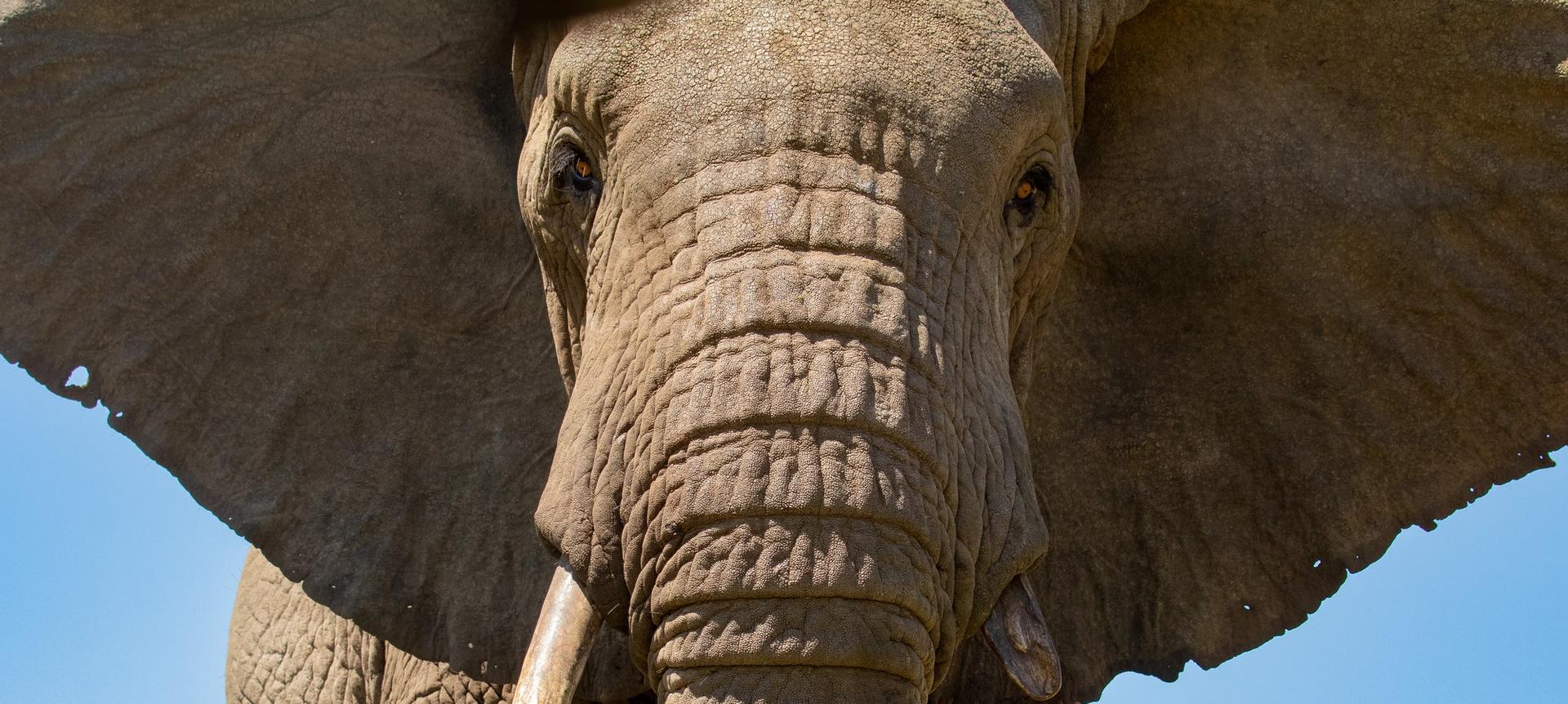
Elephants are among the most intelligent, socially complex, and emotionally rich non-human species on Earth. This view is supported not only by generations of natural history accounts and folklore, but also by decades of rigorous scientific research from field sites and cognitive studies.
For almost two thousand years, biologists and philosophers going back to Aristotle have viewed elephants as highly intelligent and some have even seen them as quasi-moral agents. The literature is full of accounts describing the apparent intelligence of elephants
One often related tale is that of Chadrasekhan, the elephant who would not lower a pillar of wood into a hole containing a sleeping dog until the dog was chased away. Another account is that of an elephant who placed vegetation under his feet to prevent himself from sinking into muddy ground where he was tied and could not reach dry ground. Yet another legend tells of captive elephants who stuffed their bells with vegetation so that they would not ring when they entered farmers’ fields at night.
Rench, a scientist who studied elephant intelligence, remarked on the surprising ability of captive elephants to work with minimal instruction as well as their talent to function as a team. Their extraordinary balance and synchronisation — pushing and dragging heavy logs onto a truck, for example — caused him to credit elephants with the ability to anticipate what will come of certain actions.
Every aspect of an elephant’s life — from navigating vast landscapes to maintaining complex social networks depends on their cognitive abilities. In elephants, intelligence is not about a single skill but a suite of interconnected capabilities.
Like all animals sensory perception is key to how elephants perceive and interact with their environment and thus is key to their cognition and memory. You can learn more about their sensory perception in the section on elephant communication. Elephants can learn to discriminate using visual, auditory, tactile and olfactory cues and can retain information for a year and in some cases longer.
You can learn more about Elephant Sensory Perception via Elephant Communication.
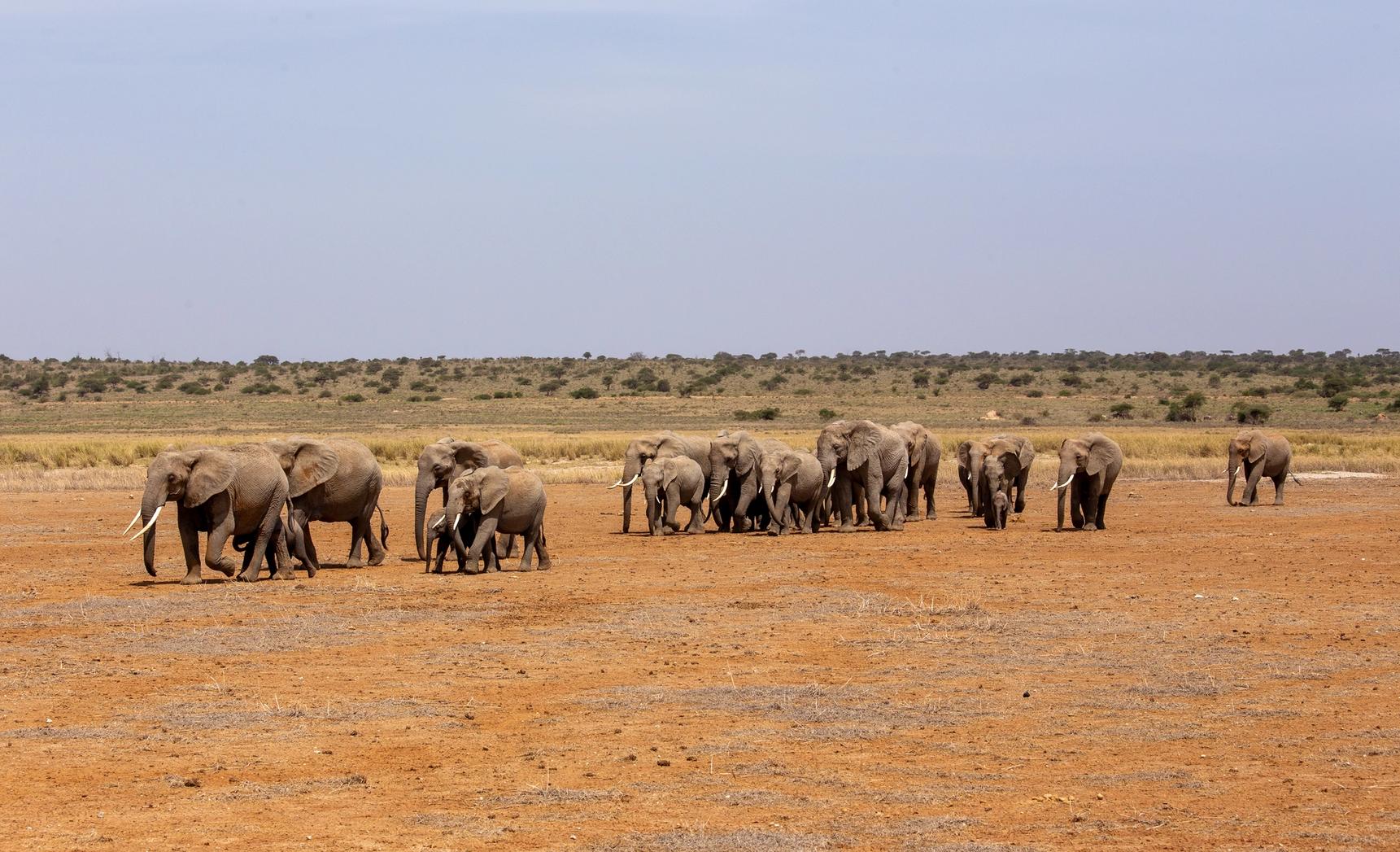
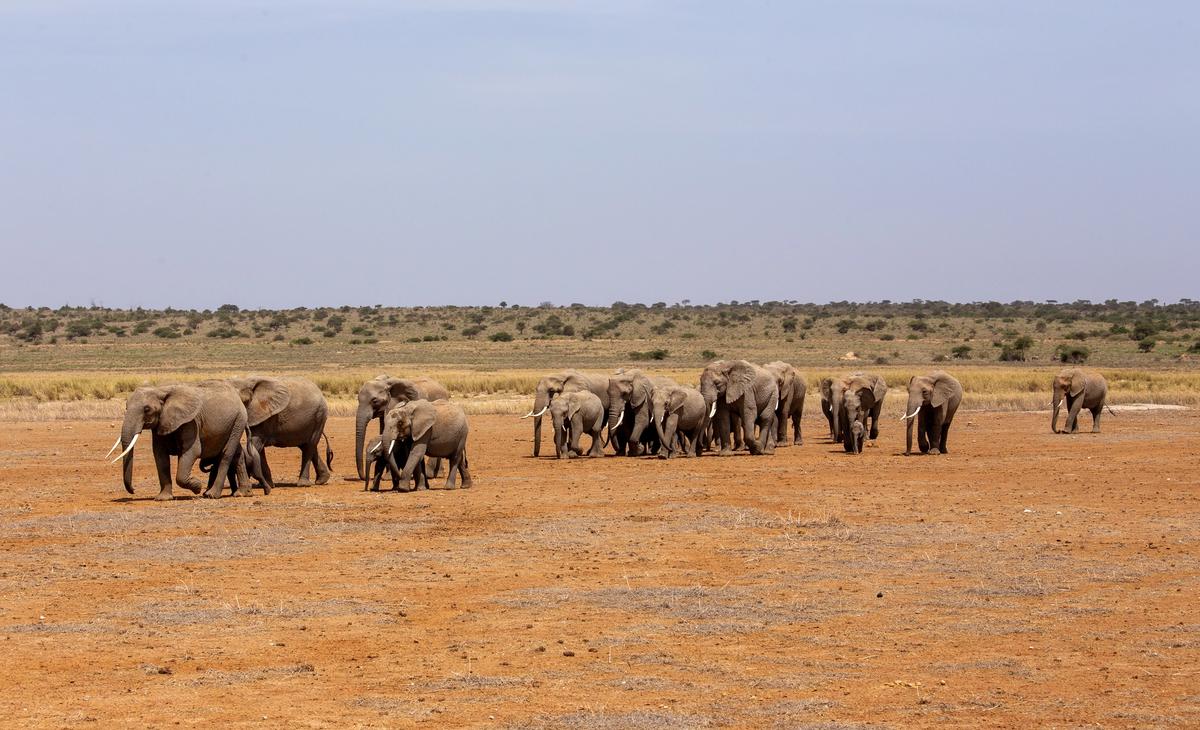
Studies of wild elephant movement provide strong evidence that elephants rely on spatial memory to navigate across large landscapes. Elephants appear to remember subtle details of geography: water sources, seasonal food locations, and migration paths that can span many years. This knowledge is often passed through generations likely via older individuals, who lead companions to critical resources during period of environmental stress. Long-term tracking research shows that African savanna elephants repeatedly return to particular resource locations over many years, even when those sites are not currently the most food-rich. For example, elephants revisit areas that were historically productive within the past decade more often than areas with better resources in the present. This suggests that elephants use long-term spatial memory, not just immediate sensory cues, to guide foraging decisions — especially during the dry season when resources are scarce.
Movement studies also indicate that elephants may navigate using cognitive maps. Elephants often make rapid, direct, goal-oriented journeys toward distant water sources from as far as 50 km away — beyond visual or olfactory range. Because elephants can travel directly to the same destination from multiple starting points, their navigation cannot be explained simply by following one learned route, supporting the idea of an internal representation of the landscape. Indeed, elephants who have been translocated hundreds of kilometers away have been known to make a bee-line back to their original home range.
Cognitive map navigation is linked to the hippocampus, a brain region essential for spatial memory. Elephants have an unusually large and neuron-dense hippocampus, which further supports their capacity for sophisticated spatial navigation. However, researchers note that alternative explanations, such as following scent cues left by other elephants, cannot yet be fully excluded.
Go to the Elephant Brain to Learn About
The Elephant Hippocampus
Elephants may also switch navigation strategies depending on familiarity. In the core of their home range, they travel flexibly using many different paths, consistent with cognitive map use. On the periphery, they rely more on habitual routes, which require less cognitive effort. This suggests elephants adapt their navigation strategy based on experience and spatial knowledge.
Overall, migration and movement studies show that elephants use long-term spatial memory and possibly cognitive maps to make complex, flexible decisions about where and how to travel across vast environments.
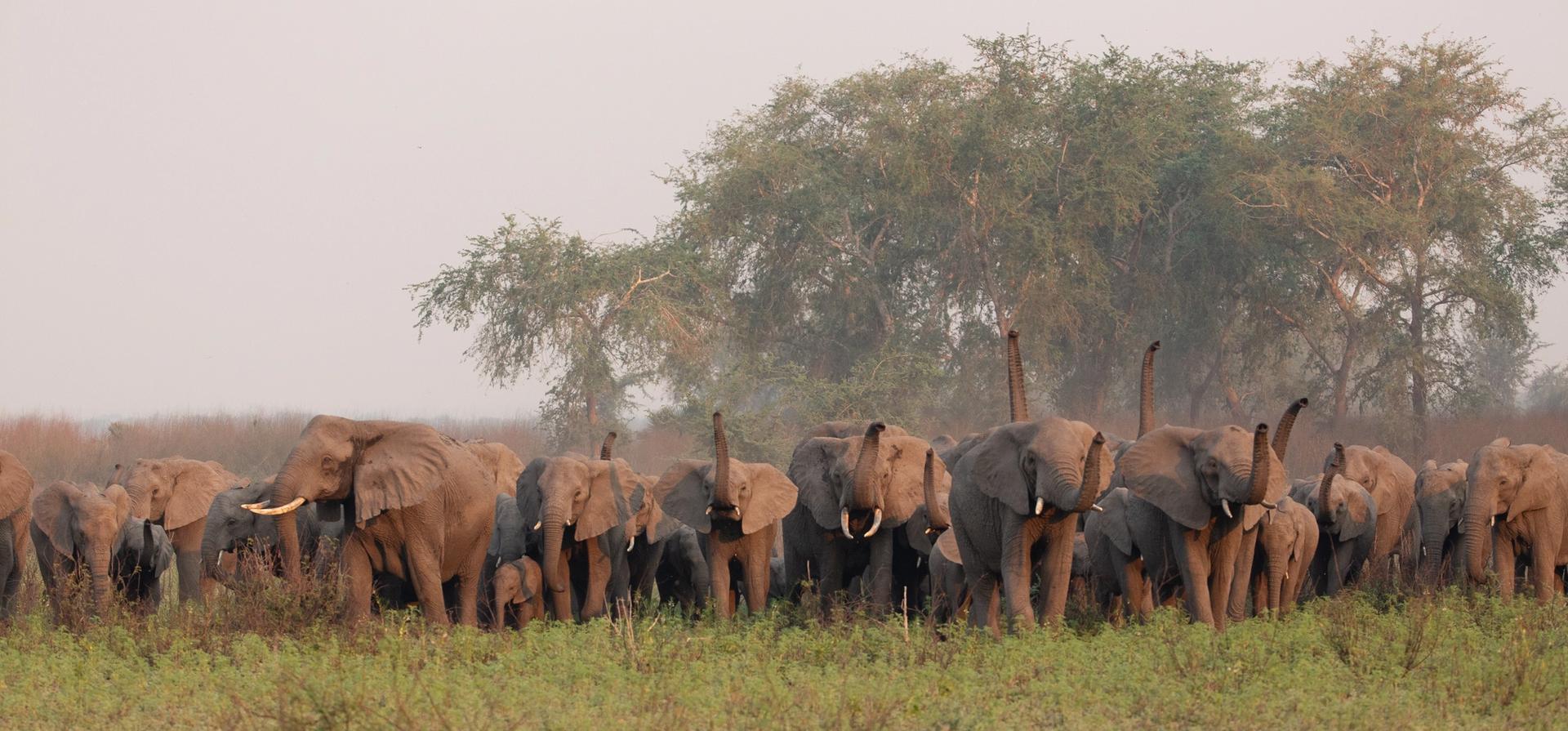
Recent research has further deepened our understanding of elephant communication. Evidence now indicates that African savanna elephants use individually specific vocalizations that function like “name-like” labels. These calls appear to be directed at particular individuals rather than simply expressing the caller’s identity. This form of referential communication —addressing another individual with a specific signal — is rare in the animal kingdom and suggests a high degree of social recognition and memory.
Read Our Publication
African elephants address one another with name-like vocal labels
In addition to recognizing others, elephants also show individual differences in personality and social strategy. Studies have documented variation in traits such as sociability, dominance, boldness, and responsiveness. These differences influence how individuals form alliances, compete, cooperate, and navigate social hierarchies. Such personality variation indicates that elephant cognition is not uniform across individuals, but instead includes flexible and nuanced behavioral strategies shaped by experience, age, and social role.
Together, these lines of research reveal a species capable of recognizing numerous individuals, tracking complex social relationships over time, and communicating in ways that involves addressing other elephants individually. Elephant societies are cognitively demanding systems that rely on memory, discrimination, and flexible social intelligence.
There is strong evidence that elephants can distinguish between different humans and use stored information about them when making decisions.
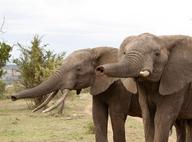
In the wild, African savanna elephants can discriminate among human ethnic groups, sexes, and ages. In Amboseli where Maasai men have historically speared elephants, they show stronger defensive or aggressive responses to Maasai men than to Kamba men, who pose little threat. Elephants also respond more defensively to Maasai adult male voices than to those of Maasai women or boys. These findings indicate that elephants can remember which categories of humans represent danger and associate threat levels with visual appearance, scent, and vocal cues. Because spearing events are relatively rare, these reactions may reflect long-term memory of infrequent or historic threats.
Read Our Publication
Elephants classify human ethnic groups by odour and garment colour
In Gorongosa where elephants were shot from vehicles and helicopters during the civil war, 25 years later survivors still responded to vehicles with a mixture of fear and aggression, again reflecting long-term memory of historic threats. Further, younger elephants who had not experienced the war, learned from older animals to respond to vehicles with aggression, creating a culturally learned behavior toward humans.
In captivity, Asian elephants have been shown to differentiate between familiar and unfamiliar humans using visual and olfactory cues, though not auditory cues alone. This suggests they retain memory of how specific humans look and smell.
Elephants also use human cues in problem-solving and decision-making contexts. African elephants can follow human pointing gestures, even subtle ones. Asian elephants do not reliably follow pointing, but they can use other visual cues — such as choosing a container near a human or begging more often from humans who can see them. Together, these studies suggest elephants store and use learned associations between human behavior, attention, and food availability.
Overall, elephants demonstrate sophisticated discrimination of humans and flexible use of stored knowledge about human characteristics and intentions.
Research from both wild and captive settings shows that elephants can solve novel problems, innovate, and use tools, suggesting flexible cognition supported by memory.
In the wild, elephants overcome novel problems such as assisting a calf stuck in a water hole or navigating electric fences to access crops, demonstrating behavioral flexibility. Experimental studies with both Asian and African elephants further confirm their ability to solve unfamiliar challenges and suggesting that elephants can store and recall problem solutions — at least over short time periods.
Elephants also show sophisticated tool use. In the wild elephants use and modify natural objects as tools — such as branches to swat flies, sticks to scratch hard-to-reach places, and have been observed throwing objects such as logs or rocks defensively. In captivity, they demonstrate means–end understanding, such as adding water to raise floating food, standing on objects to reach food, or using air blown through their trunks to move items within reach.
Some behavior suggests insightful problem-solving rather than simple trial-and-error learning. For example, one captive elephant spontaneously used a cube as a platform to reach food, then generalized this solution to other objects, showing improvement over time.
Elephants also demonstrate cooperative problem-solving. In rope-pulling tasks requiring two individuals to act simultaneously, elephants wait for partners and adjust behavior depending on whether a collaborator or competitor is present. This indicates they remember social roles and understand the need for cooperation.
Read: Ella’s Easter Baby
Across these studies, elephants must hold the goal in mind while testing solutions — engaging working memory — and in some cases retain procedural knowledge across days, months, or possibly longer. During experiments performance improvements over repeated trials suggest memory for solutions, although the duration of long-term retention remains unclear.
Overall, problem-solving and tool-use studies provide evidence that elephants can learn, remember, generalize, and sometimes innovate solutions to novel challenges, though it is unclear how long elephants can retain such knowledge.
Elephants exhibit a rich emotional life that is expressed through strong social bonds, cooperation, and caregiving. Living in close-knit family groups for decades, elephants depend on one another not only for protection and learning, but also for emotional support. Their societies are built on enduring relationships, and much of elephant behavior reflects sensitivity to the experiences and needs of others.
Researchers have documented many behaviors that are consistent with empathy and targeted helping. Elephants comfort distressed companions through gentle touches, vocal reassurance, and remaining close during moments of fear or agitation. Individuals assist injured or weakened family members, support elephants that have fallen or become immobilized, and show particular protectiveness toward calves. Such behaviors suggest that elephants respond to the emotional and physical states of others in ways that are consistent with the capacity for empathy.
If you are interested in learning more, you can read our publication, Do elephants show empathy?
One of the most striking findings in elephant cognition research is that elephants have passed the mirror self-recognition test. In these studies, an elephant uses a mirror to investigate a mark placed on its own body -behavior that suggests an awareness that the reflection corresponds to the self rather than to another individual. Mirror self-recognition is rare among non-human animals and is often considered an indicator of a sophisticated level of self-related processing.
Beyond self-recognition, cognitive researchers emphasize that elephants demonstrate complex decision-making and behavioral flexibility across a wide range of contexts. They learn from experience, adjust their responses to changing circumstances, and show innovation in both social and ecological problem-solving. These abilities make elephants important models for understanding the evolution of intelligence in long-lived, socially dependent mammals.
Recent controlled experiments reinforce the view that elephants do not simply learn by habit or repetition. Instead, they appear capable of weighing options based on past outcomes, emotional context, and risk evaluation. In unfamiliar situations, elephants may draw on stored experience to guide their choices, integrating memory with flexible assessment of the present environment.
Such findings support and strengthen many earlier field observations and anecdotes about elephant intelligence, providing modern experimental evidence that elephants are thoughtful, adaptable, and cognitively sophisticated animals.
Understanding elephant intelligence reshapes not only science but also ethics and conservation:
- Recognizing elephants as sentient and cognitively complex beings strengthens arguments for humane treatment, enriched habitats, and protection from exploitation.
- Appreciating how elephants think and remember can improve conflict mitigation and habitat planning, especially where human and elephant landscapes overlap.
Bates LA, Sayialel CN, Njiraini NW, Poole JH, Moss CJ, Byrne RW. 2007a. Elephants classify human ethnic groups by odour and garment colour. Current Biology. 17:1938–1942. https://doi.org/10.1016/j.cub.2007.09.060
Bates LA, Sayialel CN, Njiraini NW, Poole JH, Moss CJ, Byrne RW. 2007b. African elephants have expectations about locations of out-of-sight family members. Biology Letters. 3:495–498. https://doi.org/10.1098/rsbl.2007.0529
Bates LA, Lee PC, Njiraini N, Poole JH, Sayialel K, Sayialel S, Moss CJ, Byrne RW. 2008. Do elephants show empathy? Journal of Consciousness Studies. 15:204–225. https://dspace.stir.ac.uk/bitstream/1893/946/1/2008%20Bates_et_al_JCS.pdf
The largest video and audio library of elephant behaviors.
Social Intelligence & Individual Recognition
Elephants live in highly structured, multi-layered societies that require sophisticated social cognition. Their fission–fusion system means that individuals regularly separate and reunite, encountering a wide range of companions across changing contexts. Navigating such a dynamic social world requires the ability to perceive, remember, and evaluate many different individuals.
Older matriarchs appear to hold particularly extensive social and environmental knowledge. Research in Amboseli, Kenya has shown that families led by older matriarchs make more accurate decisions in social and ecological contexts, suggesting that information is accumulated and retained over a lifetime. This does not necessarily mean that older elephants have “better” memory capacity than younger ones, but it does indicate that they successfully store and use decades of experience to guide group behavior.
Field playback experiments provide strong evidence of elephants’ social memory. When researchers played recorded contact calls, elephants distinguished between familiar and unfamiliar individuals and responded differently depending on their social relationship. Females were able to recognize the calls of close associates, more distant families, and even individuals they had not encountered for extended periods. These findings suggest that elephants maintain long-term representations of many group members within their social network.