

- written by Joyce
There are many stories about how elephants respond to death. In my years among them, I have witnessed much that has moved me — but it is Tonie’s heartbreaking vigil that has remained with me, lingering longer than all the rest.
It was November 1980, the height of the dry season. Water was scarce and by midday the heat was unbearable, and dust devils spun restlessly across the plains.
Cynthia Jensen, my close friend and colleague, had set out from camp toward Ol Tukai early that morning. As she drove across the plains beyond the palms, something caught her eye — an elephant moving in a way that didn’t seem right. The elephant would take a few slow steps, then suddenly sink down onto her knees before struggling up again. Alone in the early morning light, her movements felt heavy, burdened.

Later that morning, when I returned from the field, I noticed her too. She stood solitary on the open plain, exposed to the midday sun. It was unusual to see an elephant standing alone at that hour, especially in such unforgiving conditions. There was a stillness about her that felt…wrong. Cyn returned to camp not long after I did and told me she believed the elephant we had seen had a dead baby lying at her feet.
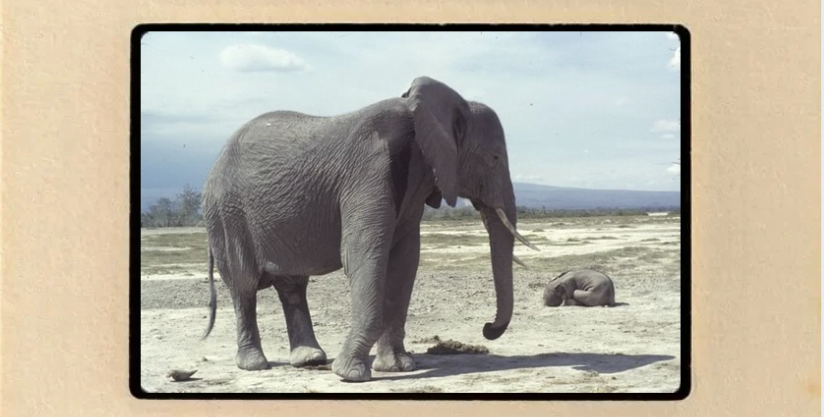
We returned to the site together, driving in silence, a quiet dread settling over us and as we approached the elephant we realized that it was Tonie from the TA family. She was still having contractions, and blood was dripping from her vulva; yet her movements were subdued, almost distant. She stood very still, her head lowered, ears hanging forward, as if the weight of the moment pressed her toward the earth.
At her feet lay her newborn calf. The tiny body was already dry under the relentless sun.
Tonie reached down with her trunk and gently, almost absently, touched the afterbirth, lifting and letting it fall. From time to time she nudged the calf softly with her foot, as though urging it to rise. Finally, she tried to roll the small body over, again and again, each attempt slow and deliberate.
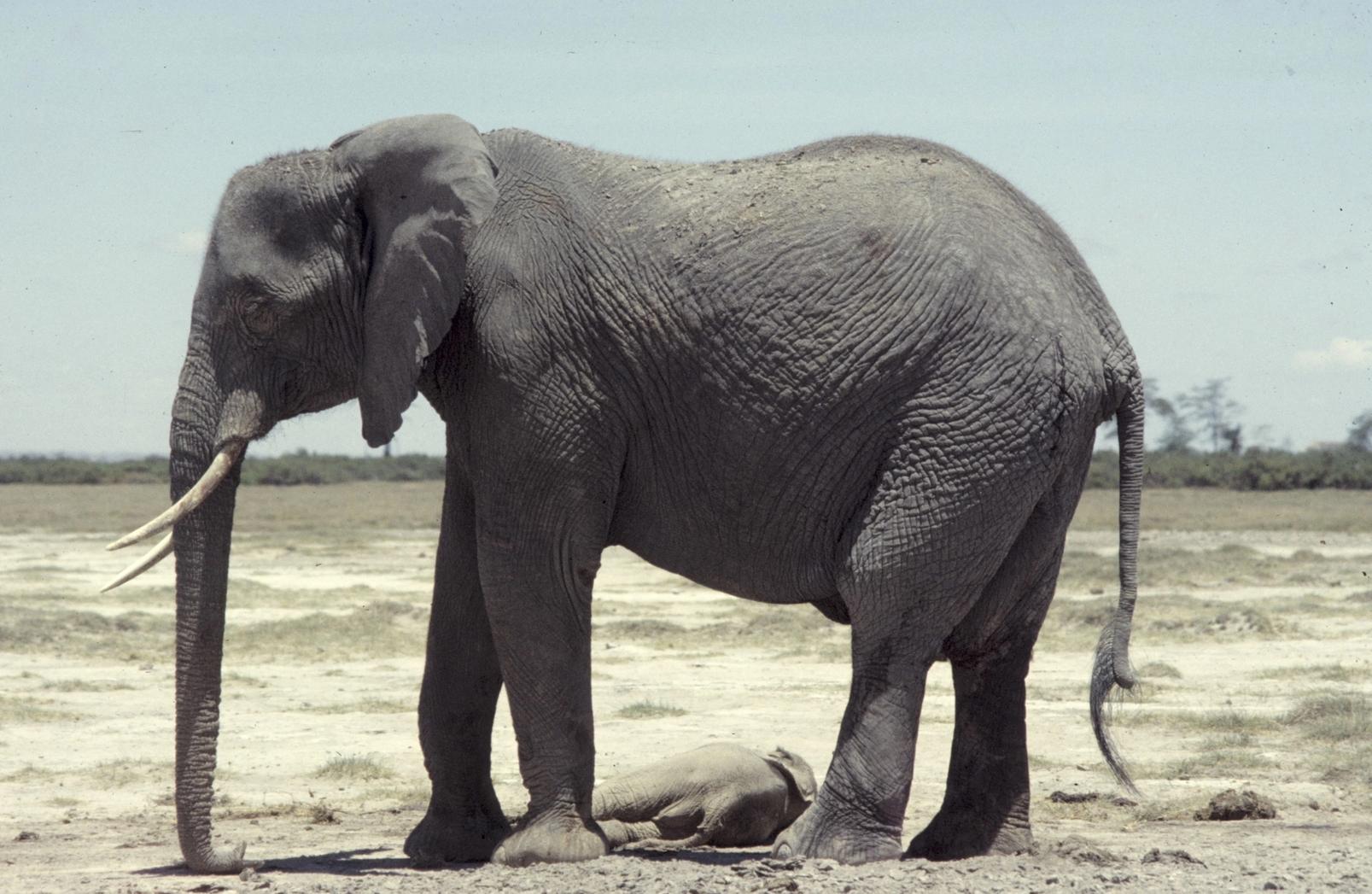
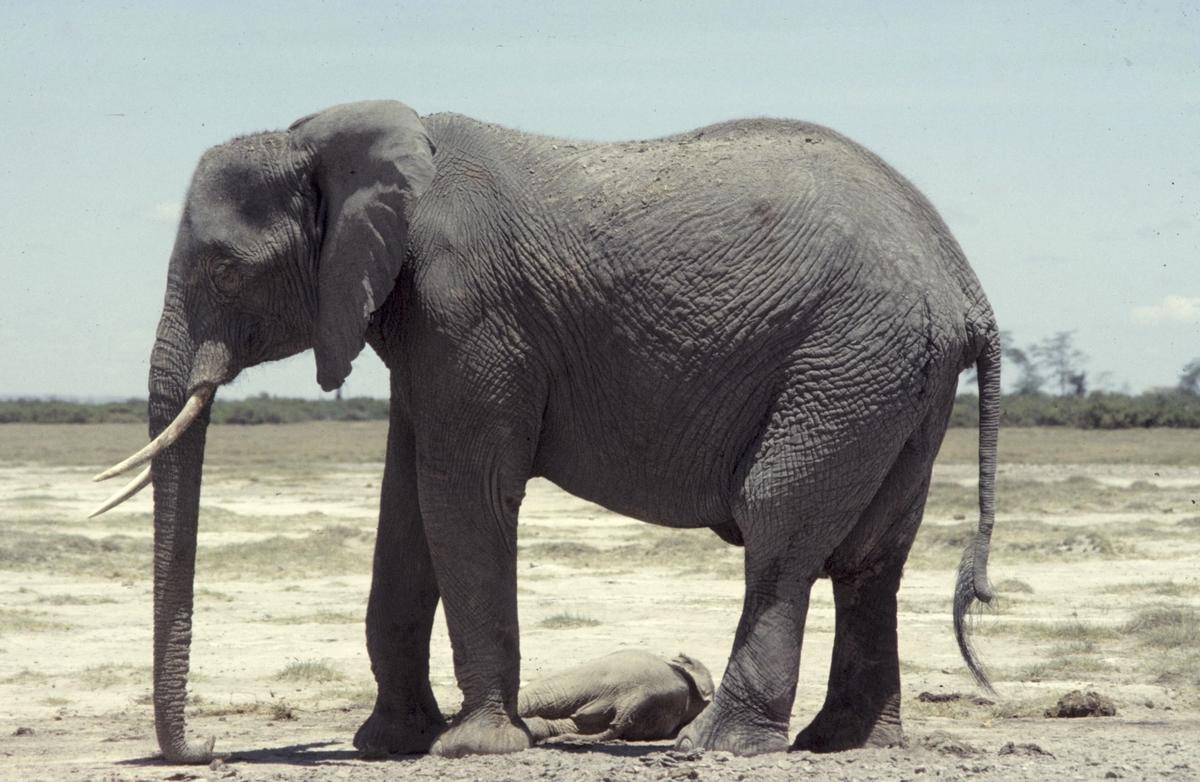
Two vultures waited nearby, shifting awkwardly in the dust, but Tonie did not leave. She remained out there on the barren plains beside her dead baby for the rest of that day — and through the long night that followed.
Joyce Poole

She positioned herself between her baby and the scavengers. Facing them, resolute, she reached back and gently nudged the small body with her hind leg, as if reassuring herself it was still there. Watching her keep vigil over her dead newborn, I felt for the first time, with real clarity, that elephants grieve. I will never forget her expression: her eyes dull with exhaustion, her mouth set, the way her ears drooped and her head hung low. Every part of her spelled grief.
By then, Tonie had been standing on the bare plains for more than twenty-four hours without food or water. Cyn and I walked back to camp, found a jerry can, and filled it. Interacting with one’s study animals — let alone providing water to elephants in a national park — was hardly proper scientific conduct. But under these circumstances, I no longer cared.
As we drove toward her, Tonie charged, and I stopped the car at once. I stepped out, placed a basin on the ground, poured water into it, and drove a short distance away.
She lifted her trunk, catching the scent, and walked straight to the basin, hesitating only briefly. She drank urgently, emptying it in two deep trunkfuls. I returned and refilled it while she waited nearby.

Later that morning, we brought two more containers. When she saw me set the basin down, she came and stood beside the car. I balanced the twenty-litre can on my lap, one foot braced on the ground, and poured as she drank. Her trunk and tusks were no more than ten centimetres from my head.
After she had emptied both cans, she reached through the open car door and gently touched my arm — twice.
In the early afternoon, I returned yet again with more water. She emptied the first container and then waited patiently while I banged around trying to get the second can from the back of the car. She drank most of that one too, using the last of it to splash over her body. In total, Tonie drank ninety litres of water.
When she had finished, she once again extended her trunk into the car and softly touched my chest and arm as if to say thank you.
The following morning we found her still keeping watch, still attempting to drive away the vultures that crept ever closer. But later that day she was gone. Only a few vultures were left and the small, fragile remains of her calf lay scattered in the dust.
Joyce Poole
Ella's Easter Baby
What occasion could be more important than welcoming a new member of the team? Joyce recalls the very special moment she watched Ella give birth.
An Elephant Never Forgets
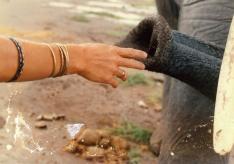
On impulse, I slowly reached out and touched the end of his tusk, acutely aware of the risk. Vladimir could easily have done some damage had he chosen to do so. Instead, he responded with remarkable calm.
Kibo's Rescue
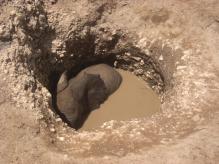
Petter had been out recording with our, then, field assistant Blake Murray for several hours when we received word from Amboseli Trust for Elephants that a baby elephant had been reported stuck in a well.
The largest video and audio library of elephant behaviors.