
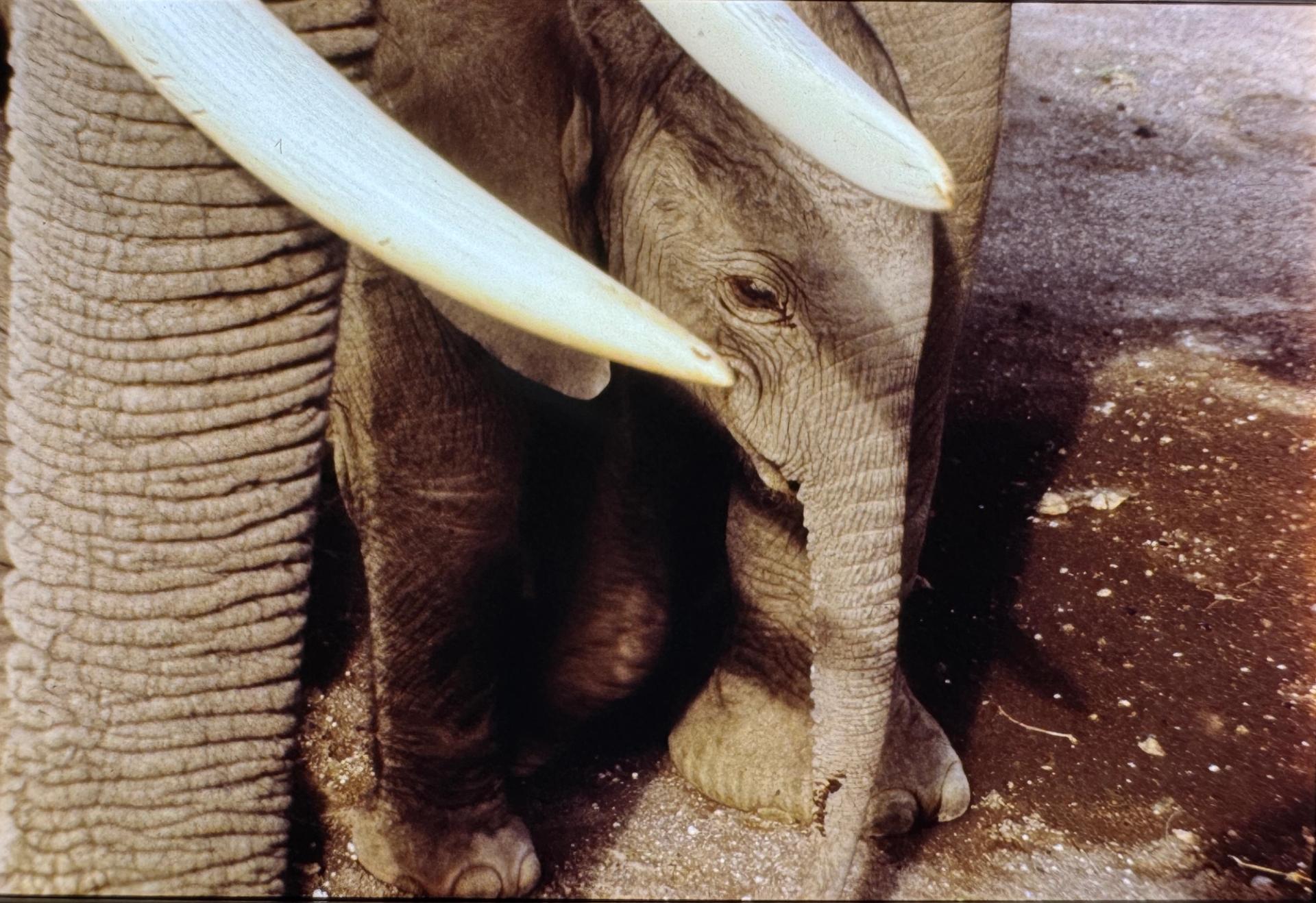
- written by Joyce in 1999
After almost nine years away – working at Kenya Wildlife Service, writing a book and having a baby – it is wonderful to find myself back in Amboseli National Park, Kenya, where I started my elephant career almost 24 years ago. I am currently studying the vocal repertoire of the African elephant, and I have chosen to focus on one particular Amboseli family: the EBs.
It often startles me to think that I have known this family since I was a girl of 19 years. Through Cynthia Moss’ BBC film, Echo of the Elephants, the EBs, led by matriarch, Echo, have been made famous around the world.
I chose this special group for three reasons: The relationships between individuals in this family are very well understood, they are totally relaxed in my presence and they are relatively easy to find on a daily basis.
I am now the mother of a young daughter, Selengei, so my time in the field is delineated by the dates of school holidays. Over the Easter recess we escaped from Nairobi to Amboseli to be with the elephants.
On the day before Easter Sunday I recorded elephant sounds with Echo’s family all morning and then returned to camp over lunch to spend some time with my daughter.
In the late afternoon I prepared to go out with the elephants again. It was stormy and I knew that it would be too windy for recording, but I felt a strong pull to be with the elephants all the same.
In my busy life as a single working mother quiet moments are relatively rare, and I often recall with nostalgia the long peaceful hours I used to spend with elephants.
As I headed toward my Land Cruiser I asked my long time colleague and friend, Norah Njiraini, whether she would like to join me. I was somewhat surprised when she climbed into the car beside me because for Norah, who observes elephants for a living, the offer on her Easter weekend was a real case of busman’s holiday.
We found Echo and her family without any trouble and I stopped the car within 10 meters of them. In earlier times Norah and I spent our days in one another’s company, but in recent years, living so far apart, we have lost that intimacy. On that Saturday afternoon, therefore, we had much to share, but just as we began to speak there began a tremendous commotion.
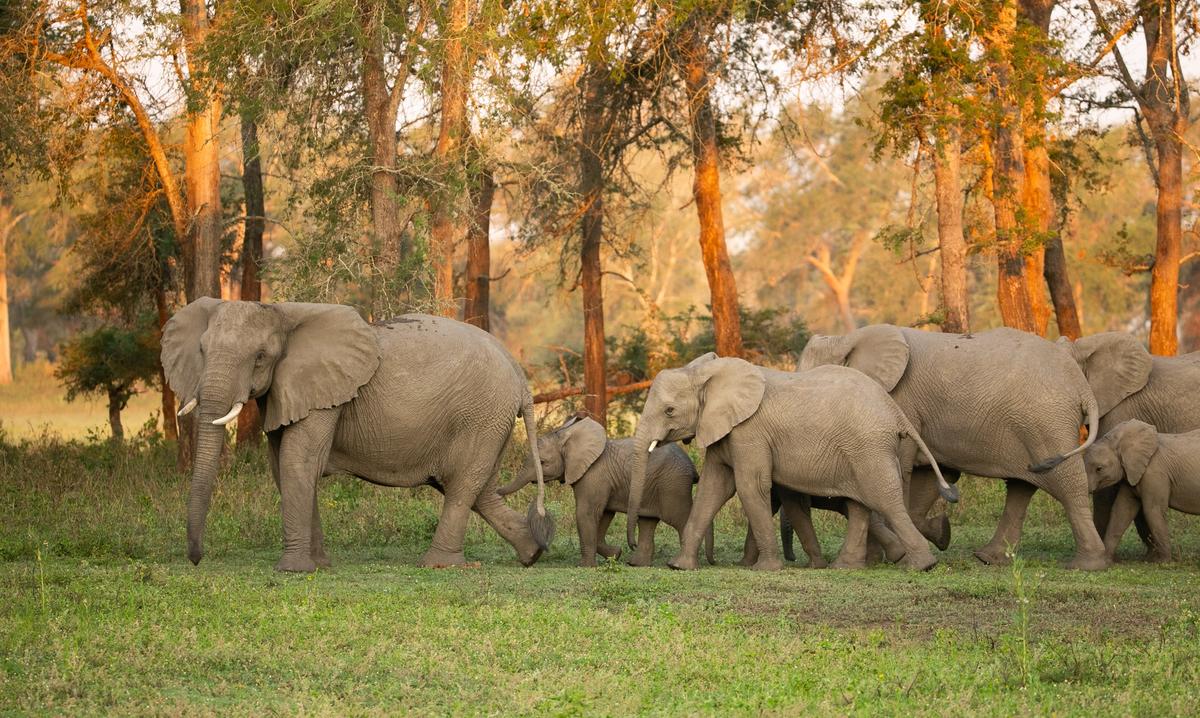
The EBs were rumbling, trumpeting and screaming at almost deafening levels and rushing together with their heads raised high, ears flapping and temporal glands streaming with secretion. Norah and I knew from experience that these were signs that the elephants were very excited about a social event and we both searched the elephant’s behaviour for clues.
As usual when I am with Norah in the company of elephants I thought aloud, “What on earth do you think is going on?” Norah answered, “I think it is a greeting ceremony.” I said, “No, I don’t think so. They’re all smelling something on the ground….look at their trunks, they’re extremely excited by something on the ground…..”
There is something magical about being with another person who understands a complex process, whatever it might be, to the same degree as you yourself. It is a rare and for me, treasured, experience in life.
Intense levels of excitement, trunks searching the ground for something we could neither see nor smell: Norah and I had our clues and our minds were already racing ahead. We both knew without voicing our thoughts what we were looking for: a bulge under the tail of an adult female. The bulge would be an infant moving down the birth canal.
I scanned my side of the group, while she scanned hers. Suddenly Norah shouted, “There! Its Ella! She’s going to have a baby!”
Sure enough there was Ella, surrounded by family and friends, knees bent in contraction and a large bulge extending approximately three feet below the base of her tail.
For an interminable moment I was paralysed with excitement. What should I do? I knew that I had no more than 30 seconds to get my stills camera, video camera or audio recorder out of the equipment box that was secured in the back of the car.
I would have to take my eyes off of Ella to get that equipment. I couldn’t think, I couldn’t move and then, as seconds passed, Ella bent her back legs in another contraction, the bulge moved further down and I willed my body into action and grabbed the simplest gadget, my camera.
Within a few seconds the infant was slipping out of Ella and onto the ground, a long red and white object still encased in its birth sac. For a moment the strange object on the ground was still, and then I saw a tiny twitch and another, stronger this time. Family members surrounded it, welcoming it into the world in the elephantine way with a cacophony of powerful sound and gently touching with their trunks.
Ella stepped forward, the placenta dangling red between her back legs, and around in a circle back to the newborn, where, with assistance from others, she released it from its securing membrane. It was only the second elephant birth I have witnessed and it was extraordinary.
The level of excitement of family and non-family members was hardly believable, except that knowing elephants as I do I have come to expect it of them. The sound for close to 30 minutes was continuous and at times deafening. Once again I found myself asking, what other species, humans included, become quite so excited over the birth of a new baby, or any number of other social events?
The rumbles, trumpets and roars of the family attracted the attention of higher ranking Estella and her family and they pushed Echo’s family to the side to get near to the baby. Kidnapping of newborns is not uncommon and if Estella had not been a close friend and member of Echo’s bond group the situation could have been dangerous.
The elephants’ sounds also attracted the attention of several males including young and inexperienced, Ramon, who, picking up on the interesting smells of the mother, mounted her, his clumsy body and feet poised above the newborn. Matriarch Echo and her adult daughter Erin, rushed to Ella’s side and, I believe, purposefully backed into her in what appeared to be an attempt to prevent the male from landing on the baby when he dismounted. In both of the births I have observed the mother was harassed in the same manner.
The newborn was on his feet within 20 minutes, a male, and he had suckled from his mother soon afterward. After half and hour or so of pandemonium Ella and her adult daughter Emma brought the infant to within two meters of the car and they remained there for almost 20 minutes. I believe that they knew that no one would dare to harass them while they were in such close proximity to us.
By the time they departed I was physically exhausted from the rush of adrenalin, but my mind was full of questions. If the presence of young males and other families is so dangerous to a newly born elephant, why on earth does the family advertise its arrival with sounds that can be heard within a two kilometer radius or more? What is the purpose of this extraordinary cacophony of powerful sound?
This question was on my mind for the rest of my stay in Amboseli and it wasn’t until my last day that I felt I had an answer.
There are many, many social situations in which elephants give very powerful chorused calls. For example, during a greeting ceremony, at the arrival of a musth male, after a mating, when any member of their family has been threatened, during an attack and any number of other social occasions. In some cases I can come up with an evolutionary reason for their extreme behaviour, but sometimes I find myself at a complete loss to explain their excitement. It is as if elephants look for any excuse to get excited together about anything and that being emotional is simply part of their nature.
On that last day I watched Echo’s family vocalising back and forth over a period of an hour or so. They were clearly discussing some plan of theirs that appeared to involve a proposal by one individual, some discussion by others, acknowledgement of their joint participation and a decision.
As I watched the process I was struck by the fact that elephants must be some of the best team players there are. They have all of the right skills: strong leadership, good communication, clear roles, good co-operation and consensus building, mutual respect, and skilful reconciliation, and they use these skills very effectively. I do believe that the outbursts of sound, scent and physical contact help to reinforce the bonds and goodwill between individuals.
The survival of females and their offspring depends upon the cohesion and co-ordination of the extended family, and on their ability to compete with other groups for access to scarce resources. Elephants use calls to reinforce bonds between relatives and friends, to care for youngsters, to reconcile differences between friends, to form coalitions against aggressors, and to keep in contact over long distances.
By calling in chorus they are underlining the importance of the unit and of each of its members. What occasion could be more important than welcoming a new member of the team?

When Elephants Mourn
There are many stories about how elephants respond to death. In her years among them, Joyce has witnessed much that has moved her — but it is Tonie’s heartbreaking vigil that has remained with her, lingering longer than all the rest.
An Elephant Never Forgets
On impulse, I slowly reached out and touched the end of his tusk, acutely aware of the risk. Vladimir could easily have done some damage had he chosen to do so. Instead, he responded with remarkable calm.
Kibo's Rescue
Petter had been out recording with our, then, field assistant Blake Murray for several hours when we received word from Amboseli Trust for Elephants that a baby elephant had been reported stuck in a well.
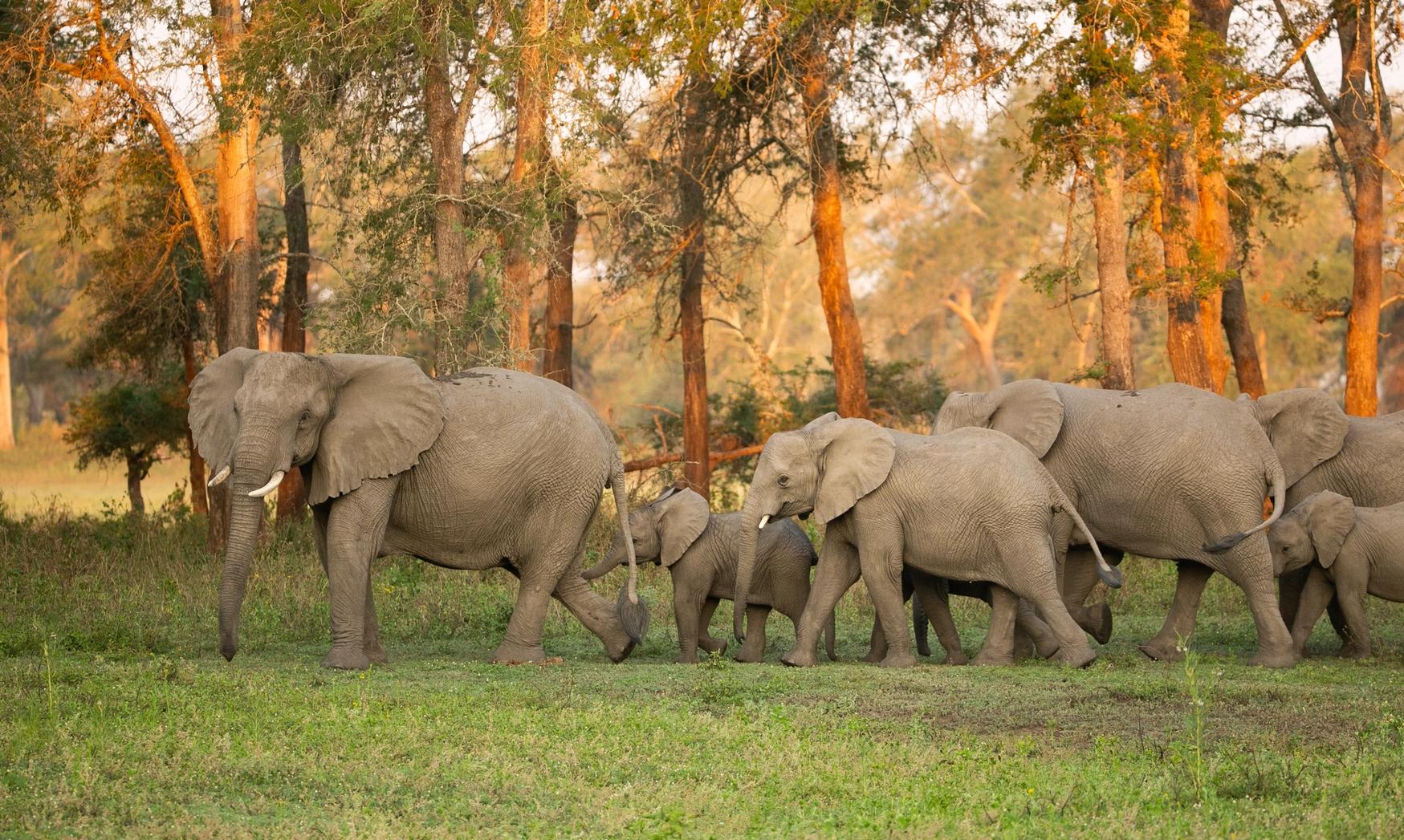
The largest video and audio library of elephant behaviors.