
- written by Selengei
To understand Esau, you have to start long before he was a super tusker, before the collar, before the film crews. You have to begin with the EB family of Amboseli National Park.
His mother, Ella, was Echo’s sister — and Echo, of course, was the iconic matriarch who opened a window into the lives of elephants through the BBC series Echo of the Elephants. Filming began in January 1990 and continued for an extraordinary 19 years. Esau was born in December of that first year, his arrival captured during the making of the very first film.
In the late 1990s, the EBs also became the primary study family for ElephantVoices’ groundbreaking research on elephant communication. Thanks to Echo and her remarkable family, much of what we understand today about elephant behavior, communication, and culture has been possible. Esau grew up in the steady presence of vehicles — and it shows. Today, he carries himself with a calm assurance that feels almost intimate, even by Amboseli standards.
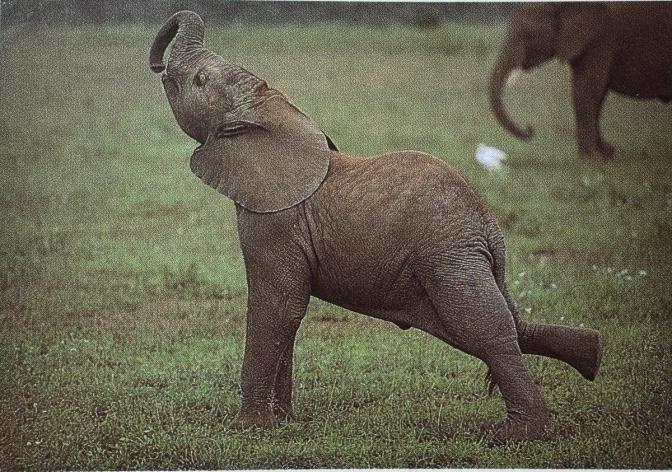
© Cynthia Moss, Echo of the Elephants
In some way or another, he has always been part of my life. When I was born, my mother (Joyce Poole) drew a small elephant calf in pen and ink to announce my arrival. Years later, I was leafing through the ‘Echo of the Elephants’ book when I found a photograph taken by Cynthia Moss that had inspired the drawing. The calf in the image was Esau. Thirty years on, I used that same drawing on my wedding invitation.
As a child, I spent hours in the back of my mother’s research car — which doubled as my jungle gym — while she leaned out the window with her recorder, gently shushing me as she captured the voices of the EB family. We even have recordings of Esau from that time; he would have been just eight or nine years old.
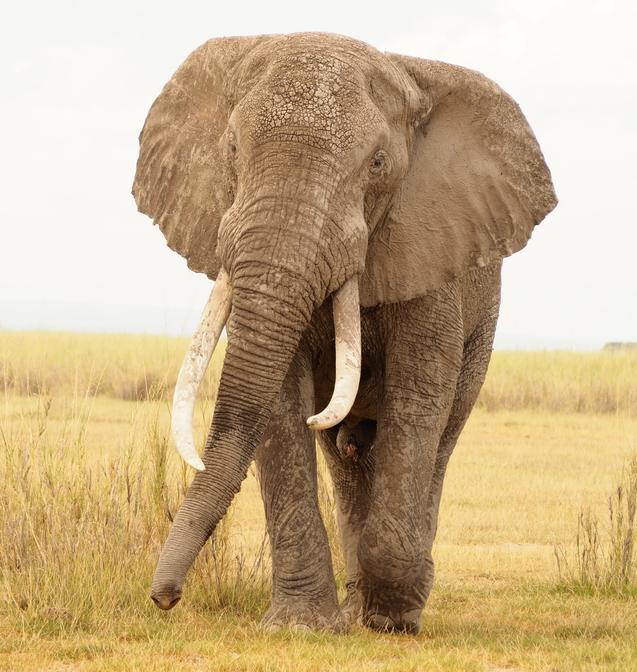
Then, as happens with young males, he left and set out on his own journey of independence. The exact date of his departure is unclear. By the end of 2003, he was no longer listed on the Amboseli Trust for Elephants’ current EB family tree, suggesting he had left his family around thirteen. That is young, though not unheard of. After that, the record thins. It was around that same time that I, too, left Amboseli for a while. In a quiet way, our paths diverged. Nearly two decades would pass before I saw him again.
What we do know is that his primary bull area - where he spends most of his time outside of musth — lies on the western side of Amboseli National Park and extends across the border into Tanzania. That cross-border range would become a defining part of his story.
I saw him again during his 2020 musth, when I was back in Amboseli while ElephantVoices was filming The Elephant Ethogram. We documented how he concentrated his movements around Kitirua Hill and the nearby waterholes, KH4 and KH5, actively seeking females. That period included at least one successful mating.
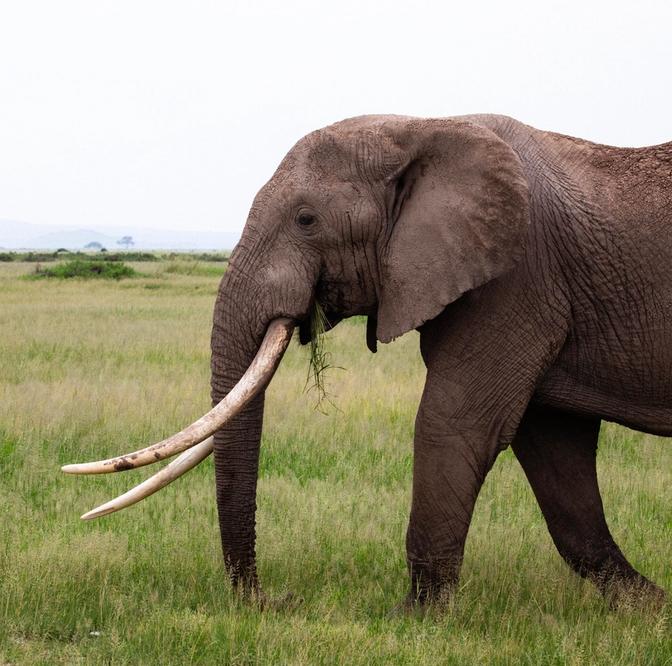
Four years later, he became the star of a documentary, Tusker: Brotherhood of Elephants, which would focuses on the lives of male elephants and I like to think I played a small part in that. In January 2024, while in the field with Norah from the Amboseli Trust for Elephants, we were outwest when we noticed a magnificent male in the distance. I recognized him immediately: Esau. He was on the verge of musth - walking with purpose, head held high, carrying that unmistakable air of rising confidence. He had grown a considerable amount in four years and by then, his tusks were already estimated to weigh over 100 pounds, earning him the title of “super tusker.”
At the same time, my uncle Bob, my aunt Gina, and my fiancé Tom were in Amboseli beginning work on a documentary (which would later be given the name, Tusker: Brotherhood of Elephants). They were searching for the right male to anchor the story. I suggested Esau and told them a little about his origin story. He was the right age, just about to enter musth and visibly on the cusp of something larger. None of us knew then that he would become the centre of the film.
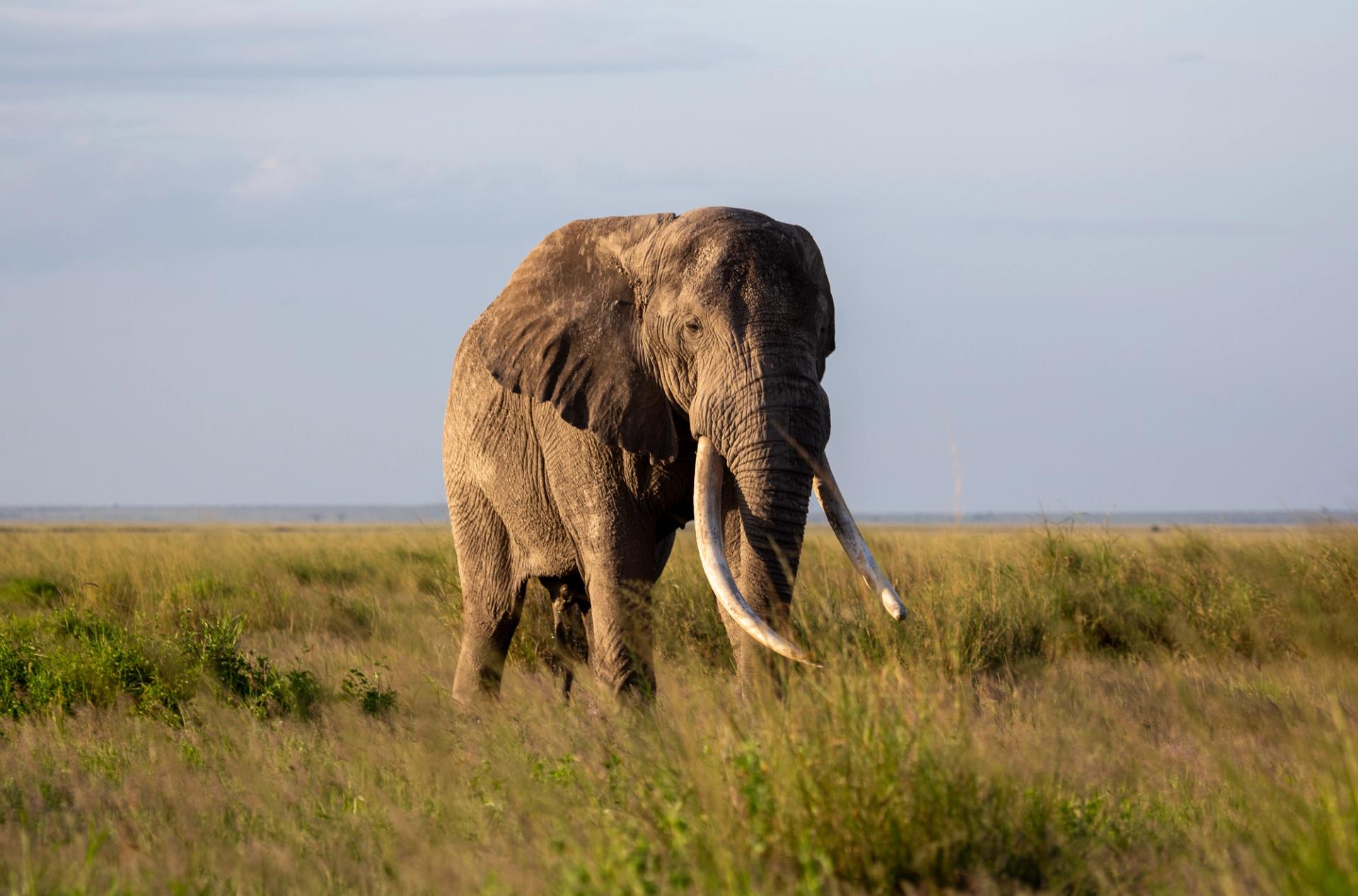
During filming, I spent many days bouncing around in the back of the “Bob-mobile” or riding in the support vehicle, following him as his story unfolded.
One day stands apart.
My mother, Joyce, and I were in the support vehicle driven by Eric Ole Kalama, scanning the horizon for males. Joyce suddenly said, “Stop! Look at that male - he’s moving with intent.”
We stopped and raised our binoculars. The male was about 300 meters from us. It was Esau — striding with purpose toward another bull roughly 500 meters ahead of him.
“He’s going to fight him,” Mama said quietly.
After fifty years with elephants — especially musth males — she has learned to read the subtleties. And she is always right.
We watched it all unfold. The actual clash lasted no more than a few seconds, but it was explosive. Esau emerged victorious. Yet what has stayed with me most was what happened afterward.
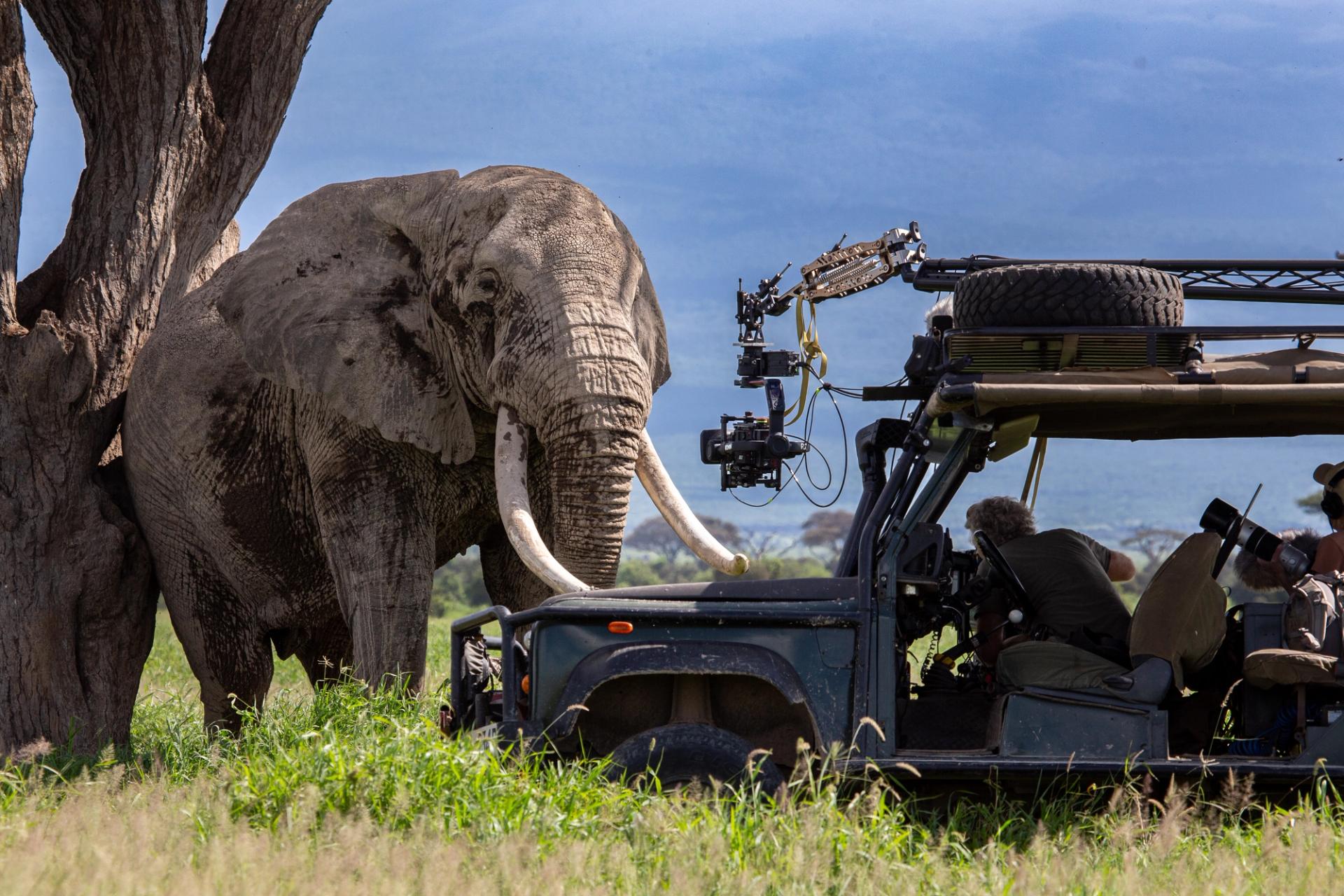
The crew had parked beside a tree when Esau walked over and leaned against it. The gesture felt deliberate — so very elephant. As though he needed to release the last of the tension from the fight, to steady himself in a brief moment of calm before moving on. And yet it also felt almost cinematic, as if he knew exactly where the cameras were and decided, quite literally to fill the frame.
Not long after, the risks of his cross-border life became painfully clear. Five of Amboseli’s prime breeding males were shot by trophy hunters after crossing into Tanzania. Males like Esau - with his long, sweeping tusks, was an obvious target.
On the very day filming wrapped, the crew was driving out of the park when they encountered a group of Big Life Foundation rangers on their way to dart Esau. He had been injured and though no one witnessed the fight, it is believed they were sustained in a confrontation with another musth male, Upendo. Tragically, Upendo succumbed to his injuries a few days later.
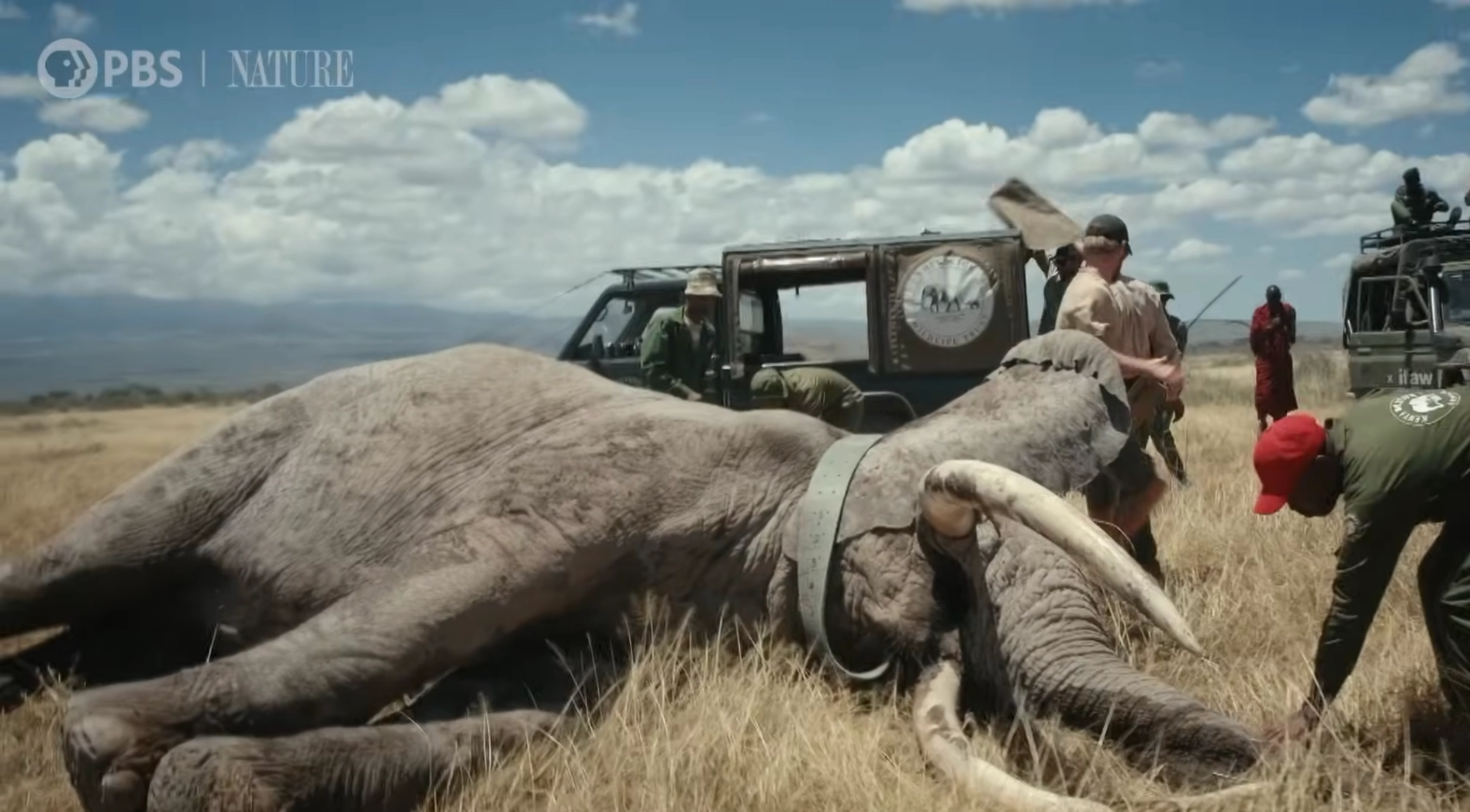
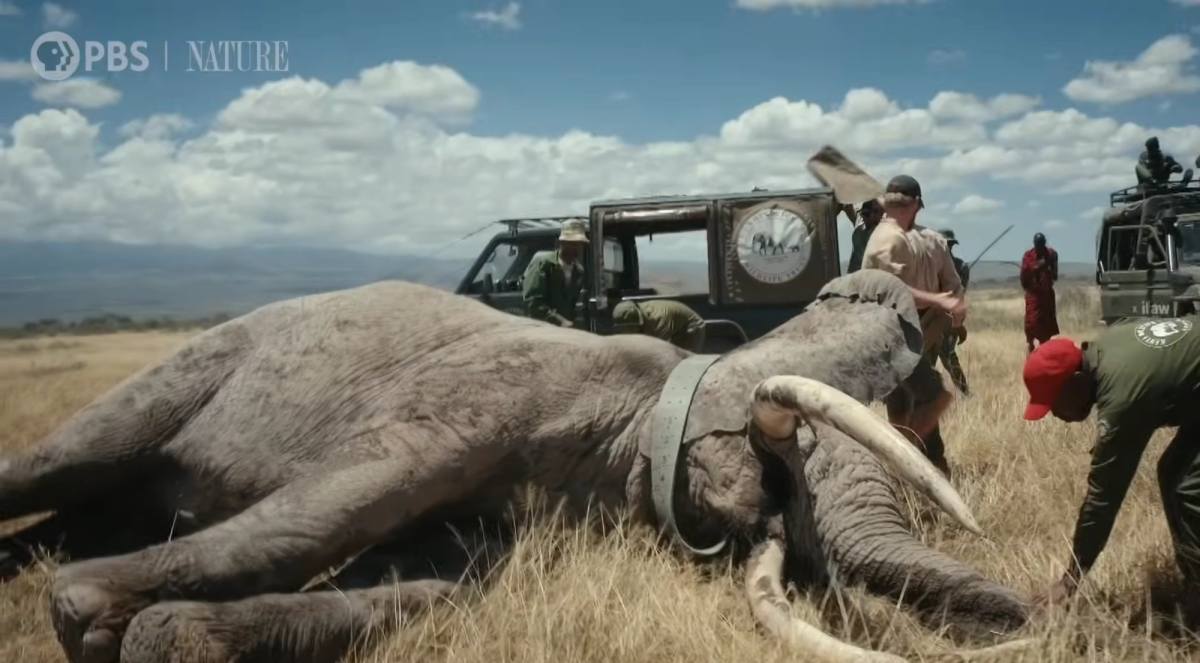
Esau was treated and fitted with a radio collar. The collar would allow researchers to monitor his movements and, importantly, signal to the Tanzanian’s that he was part of an ongoing scientific study — offering some measure of protection.
It has now been more than two years since he was collared. He continues to move between Tanzania and Amboseli as he always has since adulthood, crossing invisible political lines that mean nothing to an elephant. When he enters musth, he returns to Amboseli, drawn back to the swamps and plains where receptive females gather.
He is 37 now. Still growing. Only recently fully sexually mature. He could become one of Amboseli’s dominant breeding males, living well into his 60s passing on those enduring EB genes to the next generation.
Esau is simply an elephant moving through a landscape that is both ancient and increasingly fragile — doing what males have always done: walking, competing, seeking, surviving.
There is nothing mythical about him, and yet he is undeniably magnificent. Given time and space, he could rise into the ranks of some of the great Amboseli legends - Dionysus, Tim, Craig, Tolstoy - whose names still linger over the swamps and dust of Amboseli like memory itself. But greatness in a place like this is not destiny — it is survival.
And for Esau to become one of them, he must first be given the chance to live long enough.
Links related to the trophy hunting of male from the cross border population
- The New York Times: A Ban on Elephant Hunting Has Collapsed. Or Maybe It Never Existed
- The Guardian: Trophy hunter killings spark fierce battle over the future of super tusker elephants

When Elephants Mourn
There are many stories about how elephants respond to death. In her years among them, Joyce has witnessed much that has moved her — but it is Tonie’s heartbreaking vigil that has remained with her, lingering longer than all the rest.
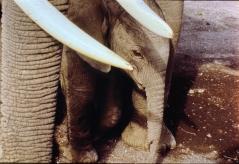
Ella's Easter Baby
What occasion could be more important than welcoming a new member of the team? Joyce recalls the very special moment she watched Ella give birth.
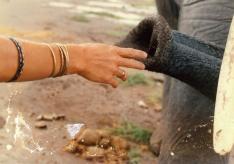
An Elephant Never Forgets
On impulse, I slowly reached out and touched the end of his tusk, acutely aware of the risk. Vladimir could easily have done some damage had he chosen to do so. Instead, he responded with remarkable calm.
The largest video and audio library of elephant behaviors.