
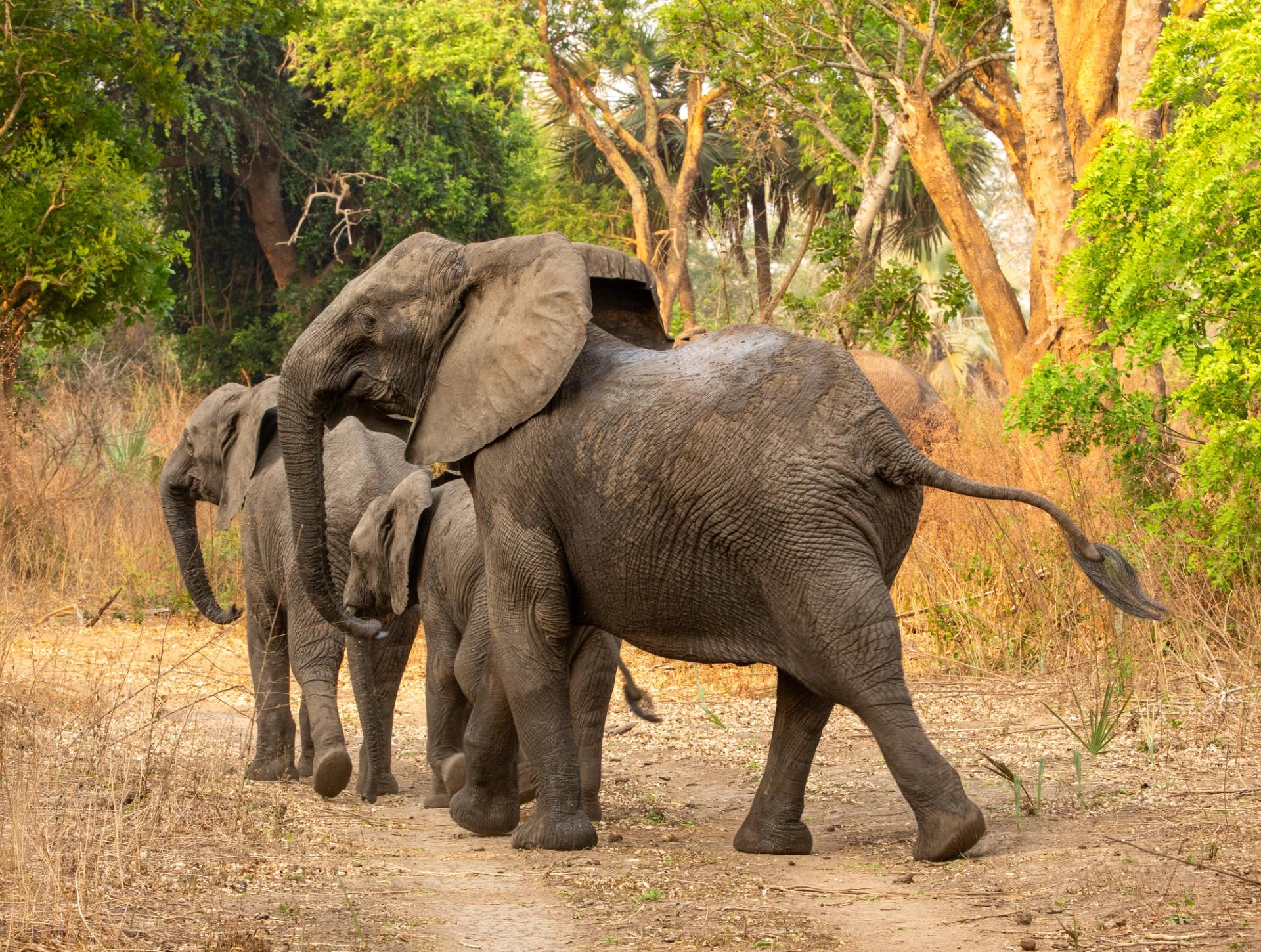
Visual communication is a central component of how African elephants convey intention, emotion, and social status. While dramatic displays such as a “charge,” ear-spreading, or trunk-tossing are widely recognized, elephants rely just as much on subtle shifts in posture, ear position, head carriage, and foot and tail movement to signal meaning.
From conspicuous dominance displays to nearly imperceptible ear adjustments, elephants use their entire bodies to communicate. To perceive these signals elephants have a specialized visual system: they see best in certain directions, are adapted for low-light conditions, and their vision is closely linked to using their trunk effectively. While not as sharp as human vision, it’s well-suited to their lifestyle and social interactions.
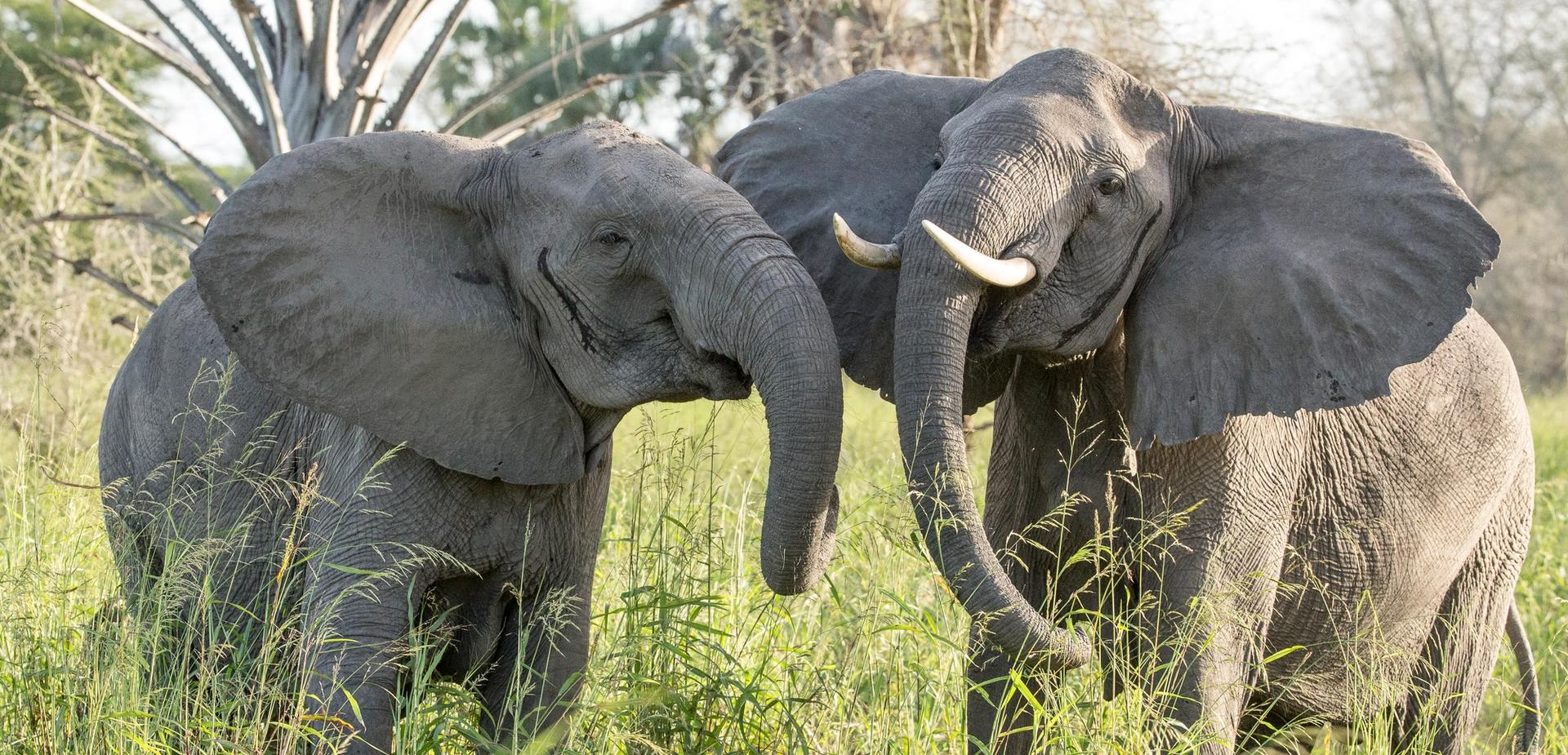
Elephants communicate visually using their head, eyes, ears, trunk, tusks, tail, feet, and overall body posture. Signals often involve coordinated adjustments in height, orientation, and apparent body size. A dominant or threatening elephant attempts to appear larger by raising her head high above her shoulders, spreading her ears wide, standing tall, or positioning herself on elevated ground such as a termite mound. A subordinate individual reduces apparent size by lowering the head and angling the ears backward. Fearful elephants may move away looking back with chin lifted and tail raised, while socially aroused individuals elevate both tail and head and rapidly flap their ears. These movements are not random gestures; they are structured, context-specific displays.
During musth, males exaggerate head height, ear position, gait, and trunk posture in conspicuous visual advertisements of condition and dominance. The characteristic “musth walk” is not merely locomotion but a signal, communicating status to rivals and potential mates alike.
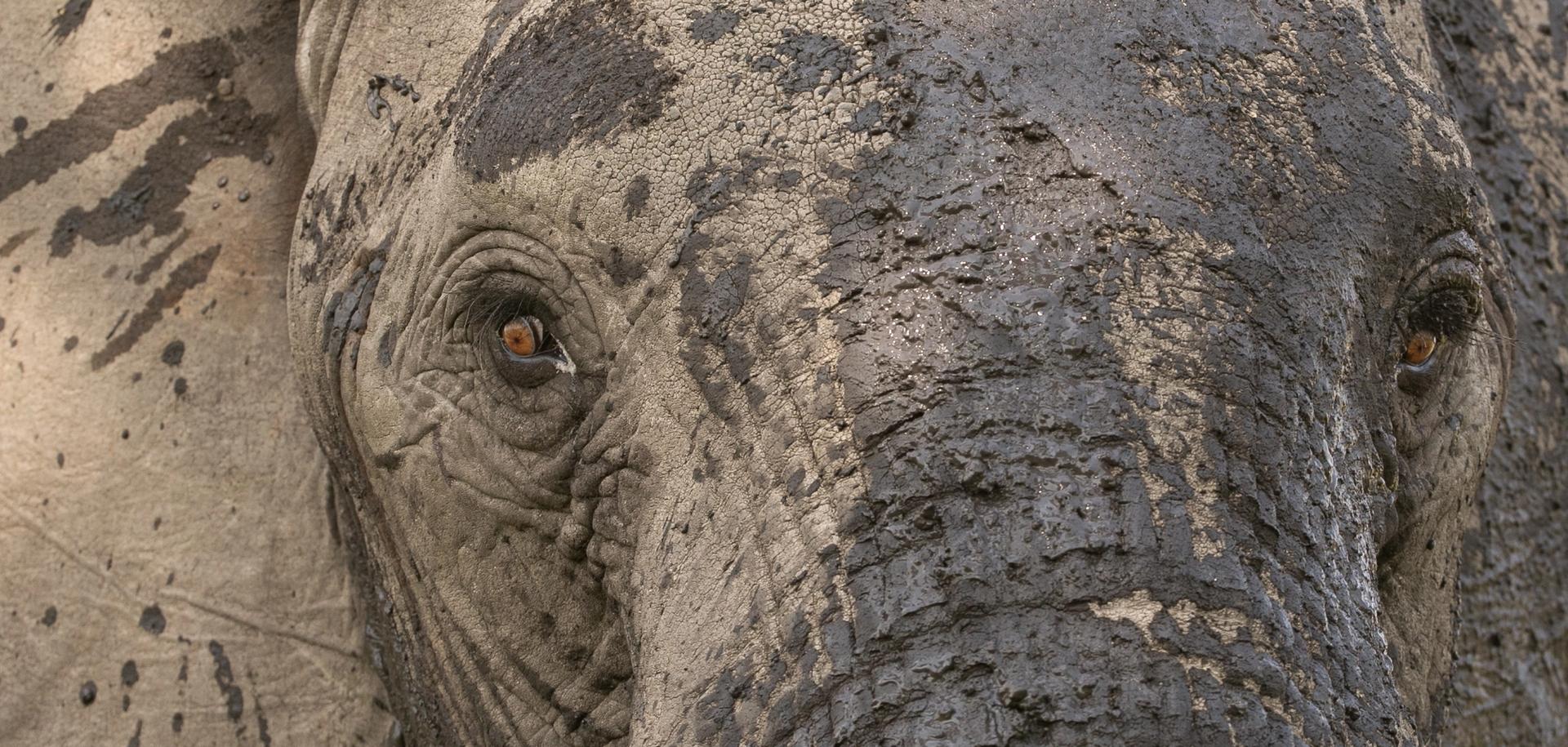
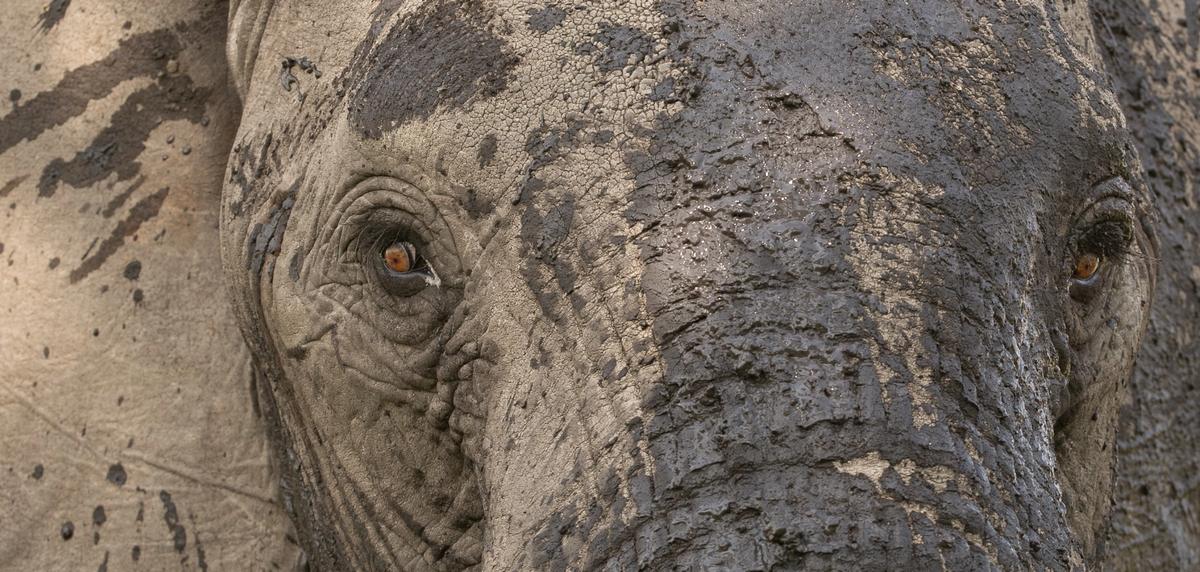
For visual communication to function effectively, elephants must perceive visual cues accurately. The eyes of elephants are positioned laterally on their heads, giving them an almost panoramic field of view: approximately 190° per eye (123° monocular and 67° binocular overlap). This arrangement provides excellent peripheral awareness and near-panoramic environmental scanning, though it limits fine frontal depth perception compared to forward-facing primates. Such lateral placement is advantageous for a large-bodied herbivore that must simultaneously monitor conspecifics, predators, and distant landscape features. Elephants can actively manipulate their visual field without moving their massive bodies. By slightly turning the head and pressing one ear against the body, an elephant can reduce blind spots and visually monitor individuals positioned behind her. This “look-back” behavior is commonly observed during vigilance or when an elephant is tracking the actions of companions to the rear.
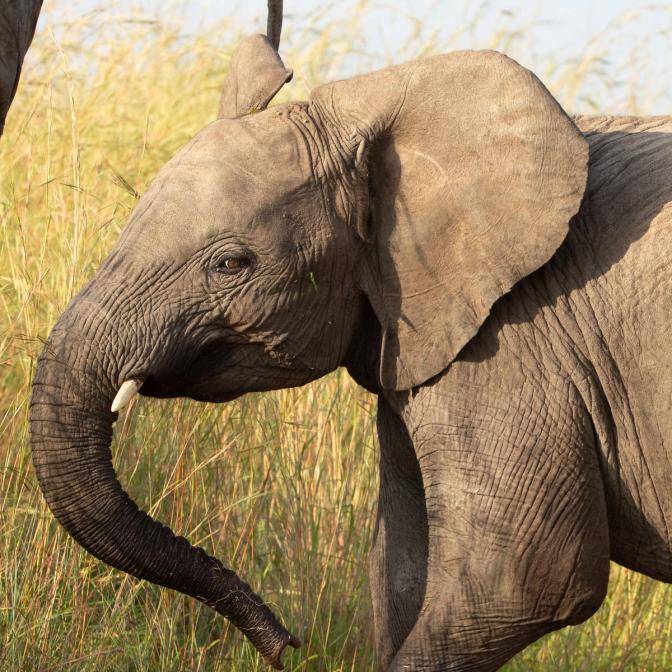
Studies of retinal ganglion cell density show that elephants possess regions of particularly high visual resolution. These specialized retinal areas likely allow elephants to focus simultaneously on objects directly in front of them while scanning the horizon for distant movement. Such an arrangement supports both social monitoring and ecological awareness.
Based on the ganglion cell densities, elephants’ sharpest vision is estimated at about "13–14 cycles per degree" — a scientific way to measure how fine the details an eye can see. While this level of acuity is lower than that of humans at long distances, it is sufficient for detecting large forms, posture changes, and movement — the visual features most relevant to elephant social life. Their vision is not optimized for fine detail at a distance but for functional perception within the scale of their environment.
The elephant eye also contains a tapetum lucidum, a reflective layer behind the retina that enhances sensitivity in low light. This reflective layer is unevenly distributed, suggesting directional specialization in dim-light vision. Such adaptations support activity during dawn, dusk, and nighttime, when elephants are often active.
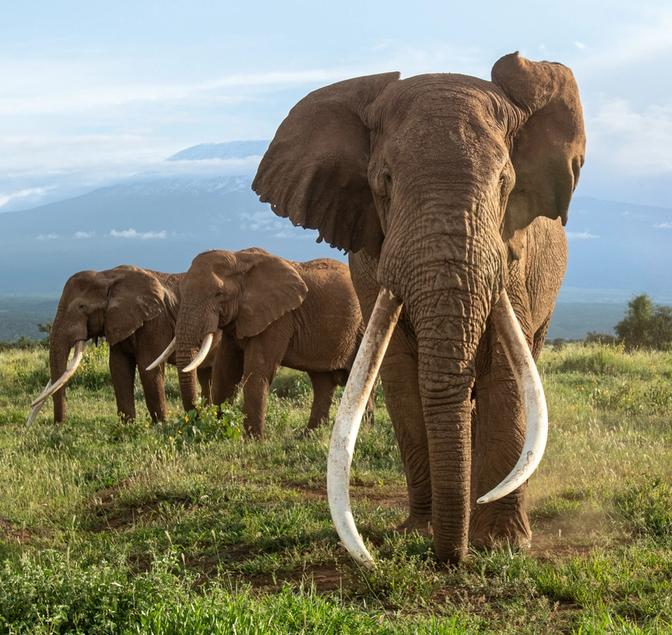
The famous tusker Tim, from Amboseli National Park, who passed away of natural causes in 2020, Ear-Waves at us.
Field observations align with anatomical findings. Elephants appear particularly sensitive to motion and contrast. In Amboseli, elephants habituated to vehicles may ignore a stationary human standing near a car, yet respond immediately to a person moving on foot. The speed and pattern of movement influence reaction strength; normal walking gaits associated with previous threat elicit stronger responses than slow, careful motion. Elephants detect silhouettes effectively against open backgrounds but may struggle to distinguish static objects embedded in visually complex environments. Motion, outline, and contrast appear to be more salient visual features than fine spatial detail.
Despite relatively modest visual acuity compared to humans, elephants can detect subtle postural cues from conspecifics. The ability of individuals to perceive small ear adjustments or changes in stance at distances of many meters suggests that their visual system is finely tuned to the body language of other elephants.
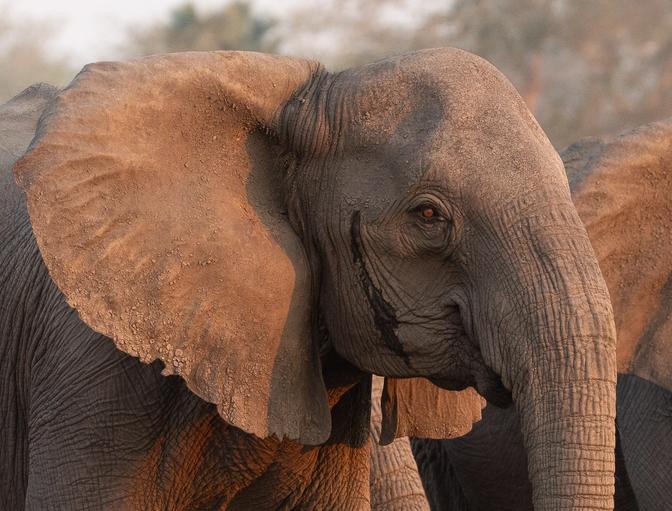
Genetic and physiological research indicates that African elephants are likely dichromatic, possessing visual pigments similar to those of human red–green color-blind individuals. Their color discrimination is therefore more limited than that of trichromatic primates. Nonetheless, recent research suggests elephants may use leaf color as a cue during foraging, indicating that their color perception is ecologically meaningful even if restricted. Rather than perceiving a broad palette, elephants appear adapted to detect contrasts relevant to vegetation, movement, and environmental change.
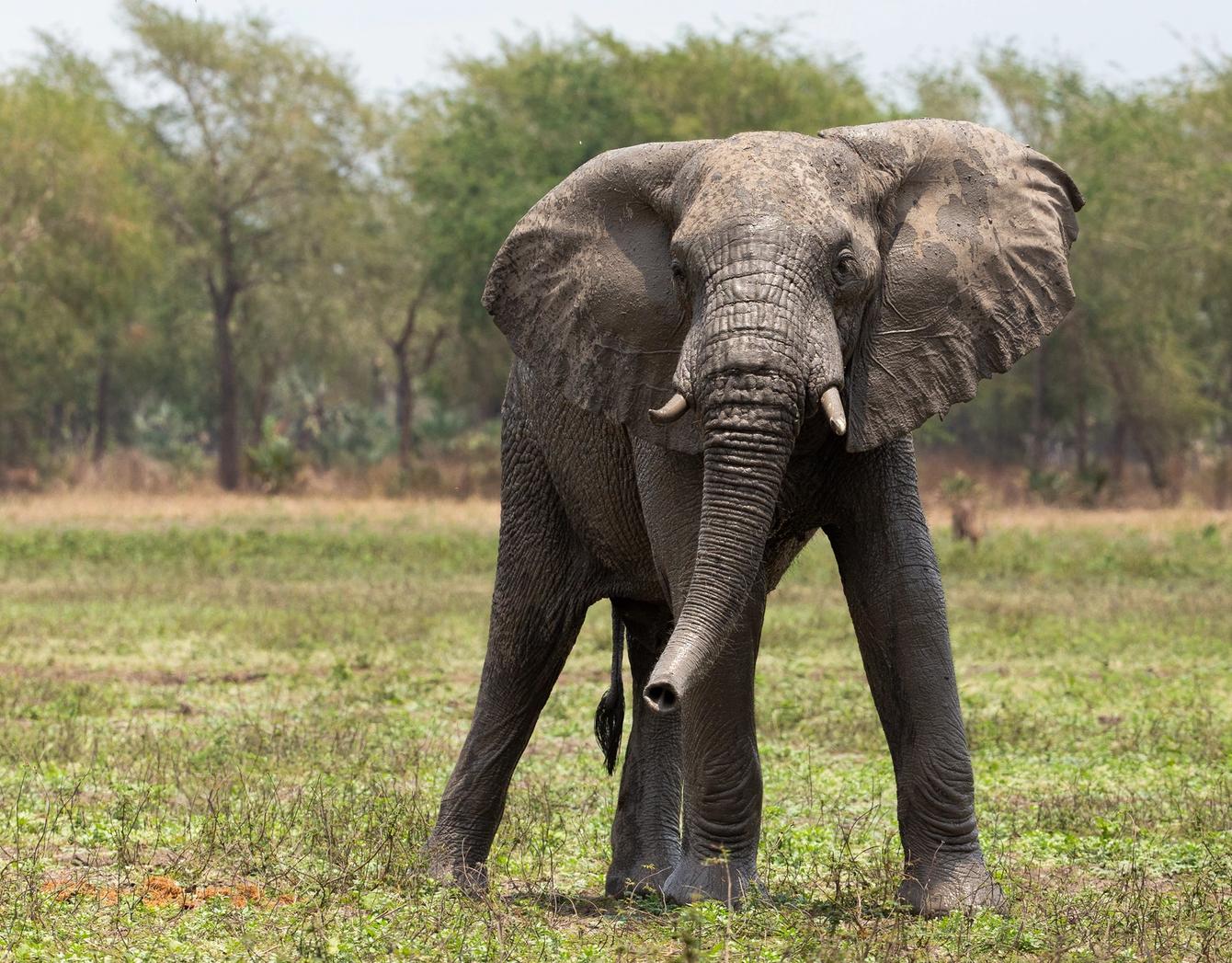
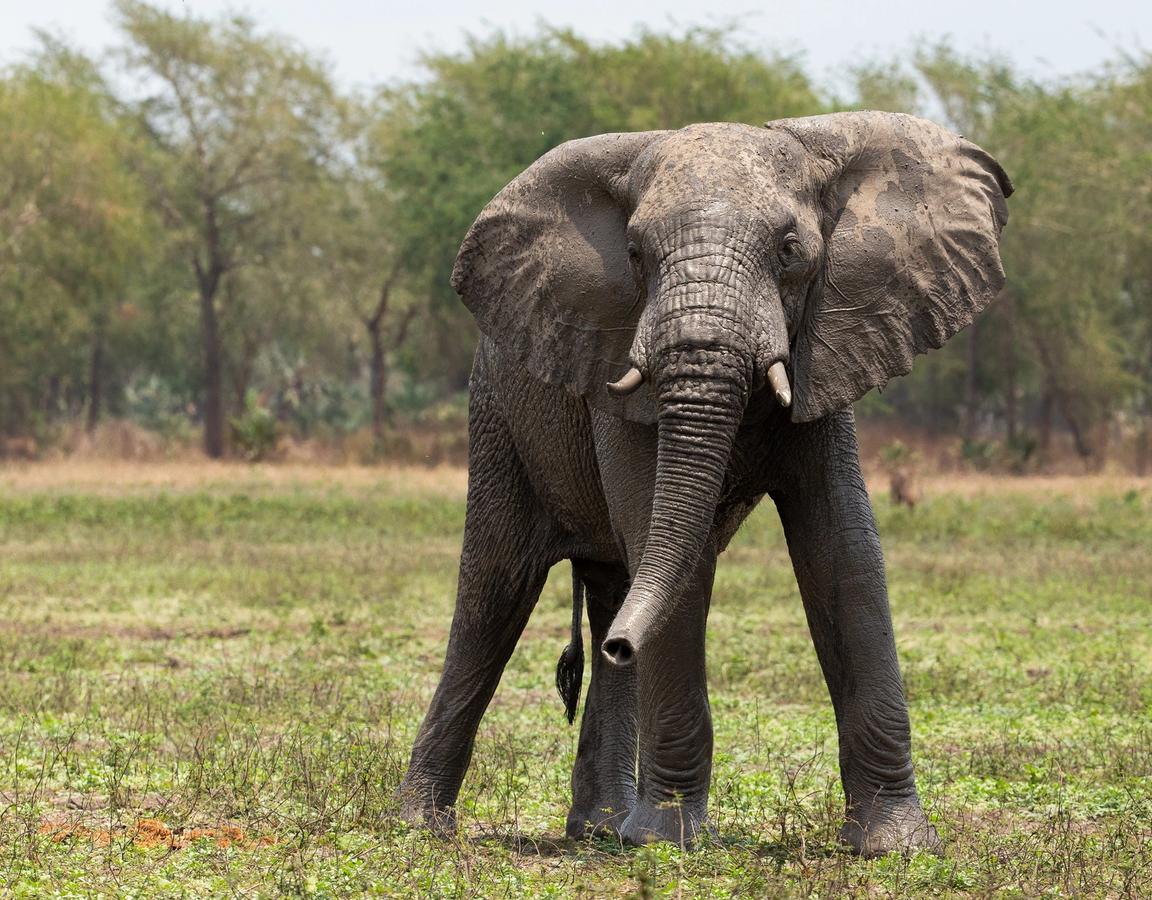
The elephant’s visual system appears closely integrated with trunk function. Retinal specializations and head positioning likely facilitate precise trunk placement during feeding, tactile exploration, and social interaction. Vision and touch operate in concert, allowing elephants to coordinate fine trunk movements while maintaining awareness of their surroundings and companions.
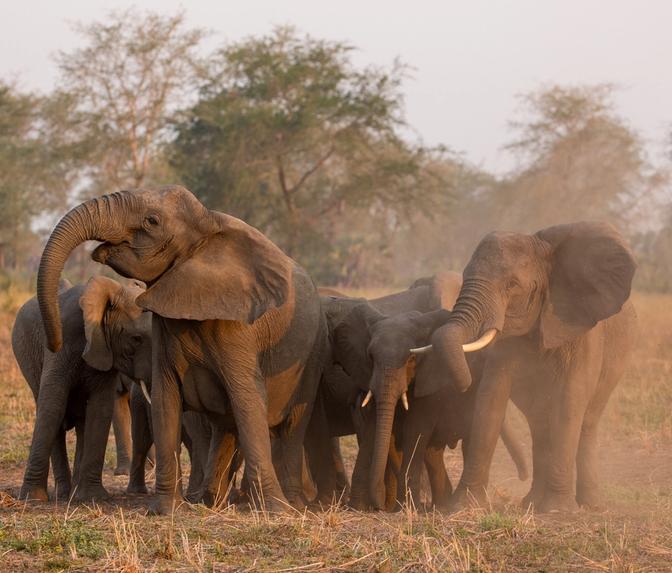
Visual signals rarely operate alone. Rapid-Ear-Flapping may accompany Greeting-Rumbles and Temporal-Gland-Secretion, a Forward-Trunk-Swing may be associated with a Trumpet-Blast. Trunk-to-Genitals may occur alongside chemical investigation. Trunk gestures often combine tactile, acoustic, and visual components. As with chemical communication, meaning emerges from the integration of multiple sensory channels.
Elephant communication is therefore best understood as multimodal. Visual displays contribute one layer within a broader communicative system that includes sound, scent, touch, and vibration.
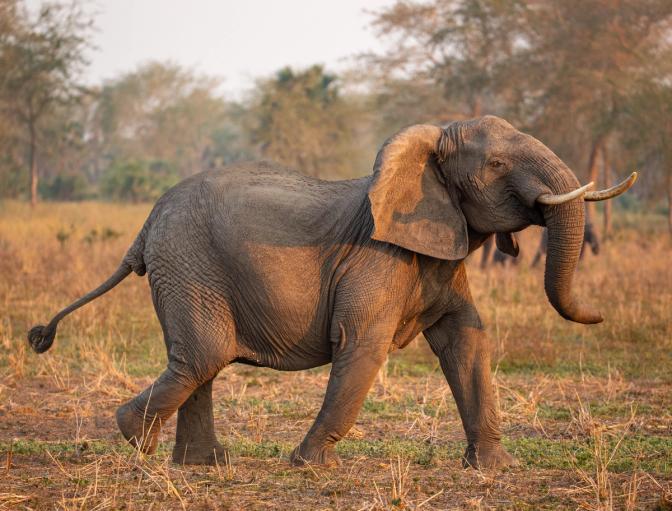
Elephant vision is not optimized for fine distant detail, but it is exquisitely suited to detecting motion, monitoring the horizon, interpreting posture and size changes, and coordinating trunk movements. Through dramatic gestures such as the musth walk and subtle signals such as ear-folding, elephants use their bodies as expressive instruments within a socially complex world. Visual communication in elephants is both bold and nuanced, shaped by anatomy, ecology, and the demands of life in long-lived, cognitively sophisticated societies.
Kahl MP, Armstrong BD. 2000. Visual and tactile displays in African elephants (Loxodonta africana): a progress report (1991–1997). Elephant. 2(4):19–21.
Kahl MP, Armstrong BD. 2002. Visual displays of wild African elephants during musth. Mammalia. 66:159–171.
Kühme VW. 1963a. Ethology of the African elephant. Int Zoo Yearb. 4:113–121.


The largest video and audio library of elephant behaviors.