
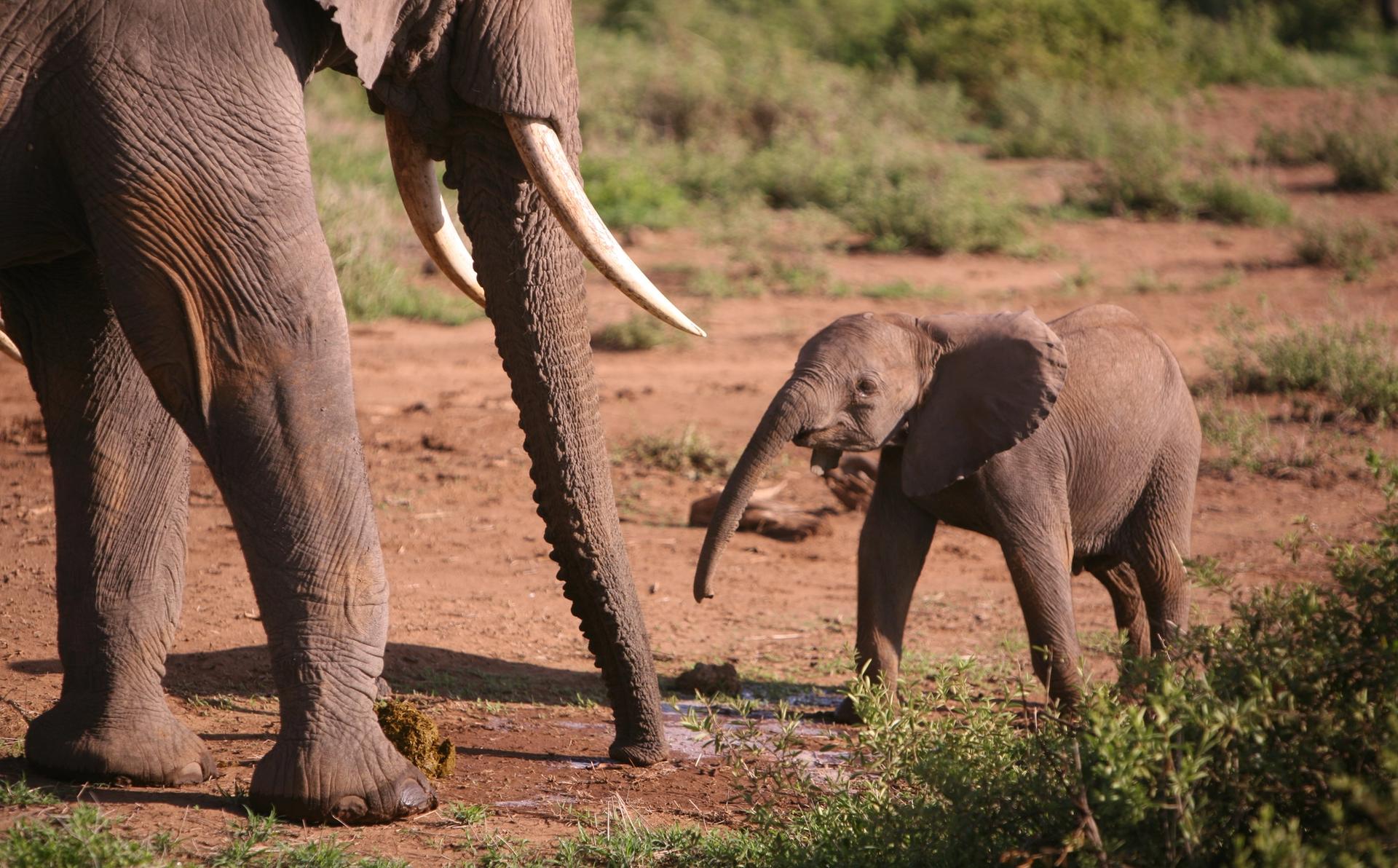
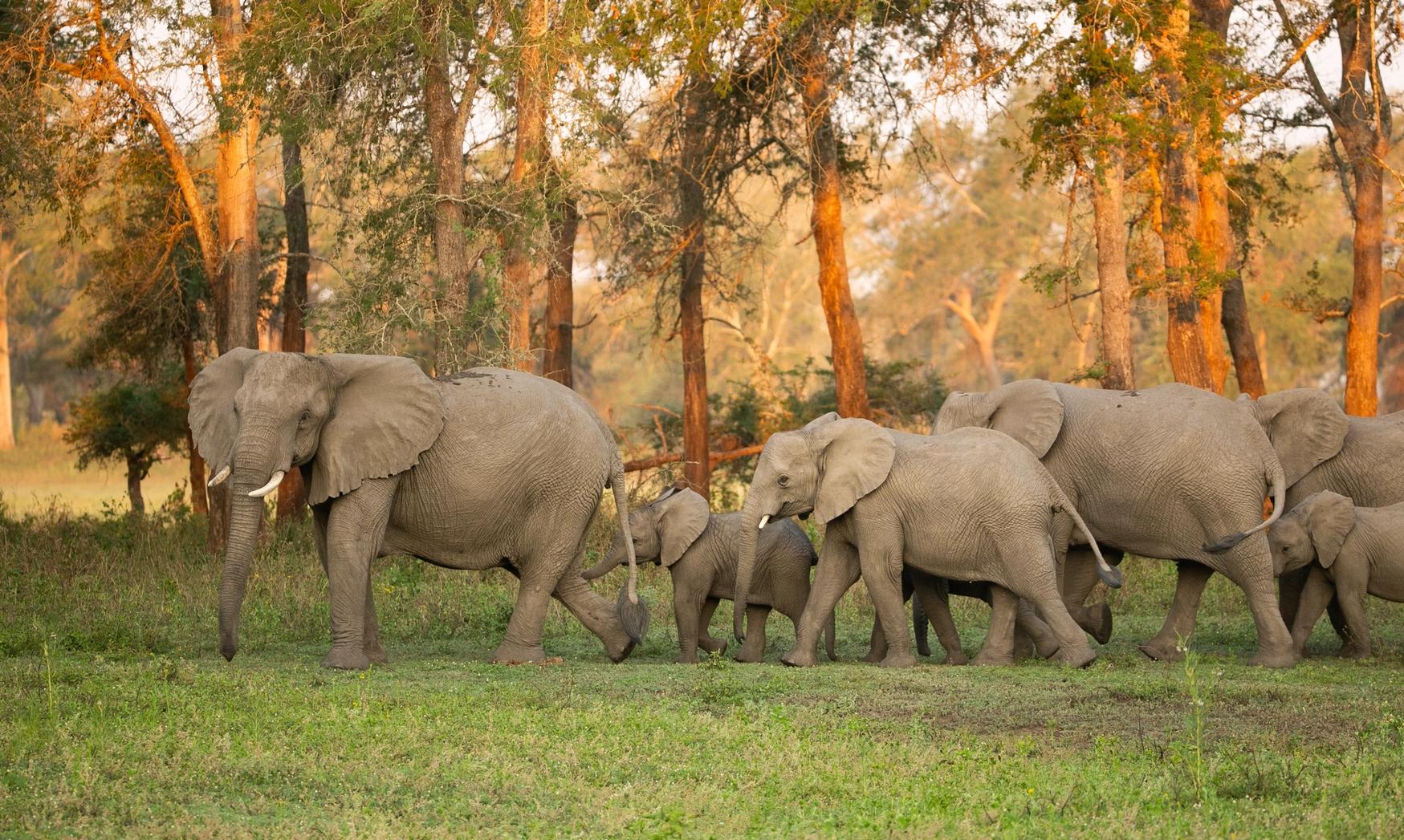
The cohesive, multi-generational structure of an elephant family provides both protection and a rich social environment in which calves can mature and learn. Young elephants learn normal behavior in a social context, and learning from others, or social learning, plays a crucial role in their development.
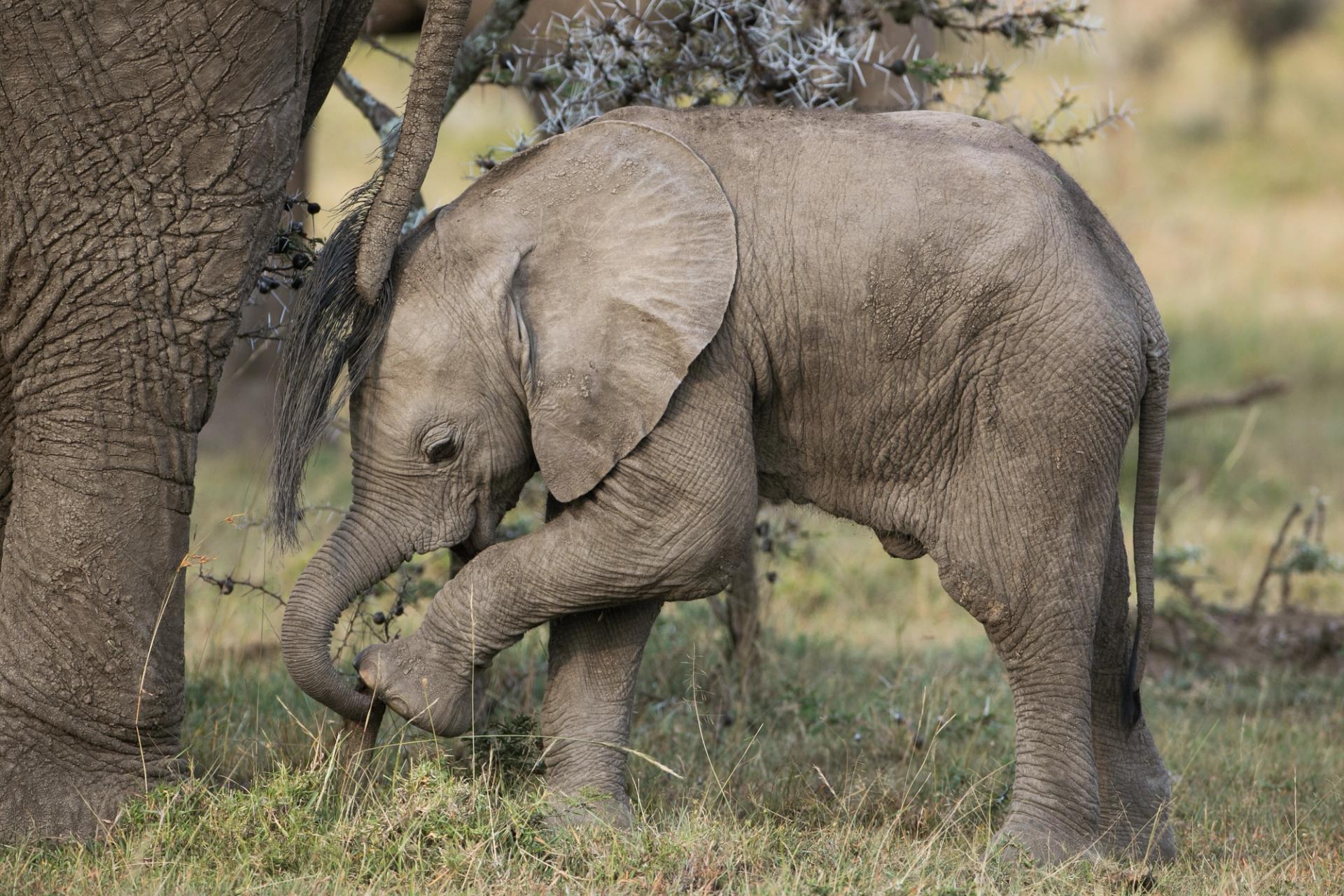
Much of what we know about elephant calf development comes from the studies of Phyllis Lee and colleagues. Newborn calves initially have little control over their trunks and must practice complex coordination before they can feed independently. At one to two months of age, calves begin to sample vegetation, long before solid food contributes substantially to their nutrition. They pick up plant material, manipulate it, place it in their mouths, and sometimes discard it. This exploratory behavior appears to serve both motor practice and information gathering.
Calves continue to suckle for approximately two years, during which time they gradually acquire foraging knowledge. They often sample foods eaten by adults, sometimes reaching into the mouths of their mothers or allomothers to remove partially chewed items. They may also consume fresh dung, a behavior that likely aids in acquiring essential gut microbes while simultaneously exposing them to chemical cues about edible plants. Because elephants exploit a wide range of seasonally and geographically variable food species, such socially mediated learning is essential part of a calf’s developing skills.
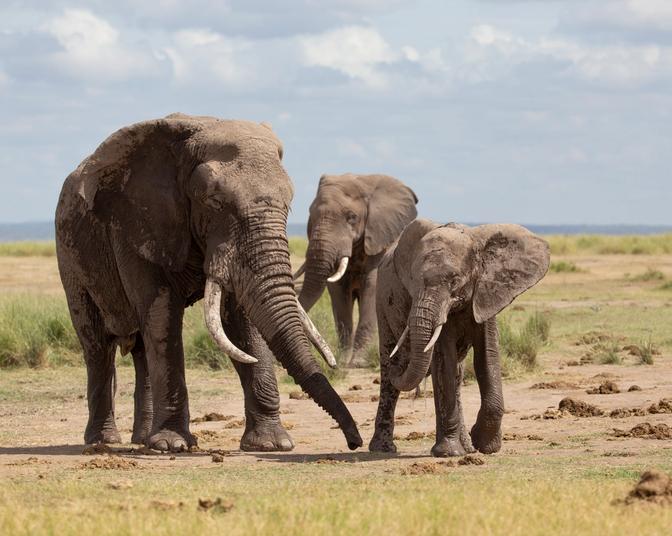
Reproductive competence in elephants also develops within a social framework. Young females experiencing their first estrus often do not demonstrate typical estrous behavior. Instead of consorting with a high ranking musth male as an experienced female would, they are often chased and mounted by young and non-musth males. The acquisition of more appropriate estrous behaviors, and the choice of mates, seems to be facilitated by the presence and behavior of mothers, who are often observed exhibiting estrous postures and behaviors around their first-time estrous daughters, when not in estrus themselves.
For instance, mothers or other close female relatives may be observed to approach or to avoid males, to run with their first-time estrous daughters during long chases, and occasionally to make post-copulatory calls after the young female is mated. The behavior of mothers and daughters during a daughter’s first estrous period indicates the importance of a social context for learning, and suggests that mother elephants may be engaged in a rudimentary form of teaching.
Read about our study
Why do African elephants simulate oestrus?
For male elephants, adolescence marks a challenging transition. Between ten and twenty years of age, mortality rates are significantly higher for males than for females. To survive on their own, newly independent males need to have acquired sufficient social experience with other males as well as knowledge of the surrounding habitat.
Males begin to learn some of these skills while still with their natal family.While juvenile females appear to consolidate their relationships within the family, juveniles males spend much of their time involved in exploratory and play with same sex partners outside the family, thereby socializing and bonding with their future peer group. This form of play allows males to assess the strength of their future competition.
Once independent, young males often associate with older bulls, especially musth males, following them and investigating the same urine cues and potential mates. These young males can often be seen watching the subtle manoeuvring of older males around an estrous female. Older males tolerate close proximity of younger males, which provides opportunities for observational learning. Joyce Poole’s research documented musth males allowing young observers to stand very near an estrous female while keeping rival adult males at a distance. Such tolerance may facilitate the acquisition of reproductive skills.
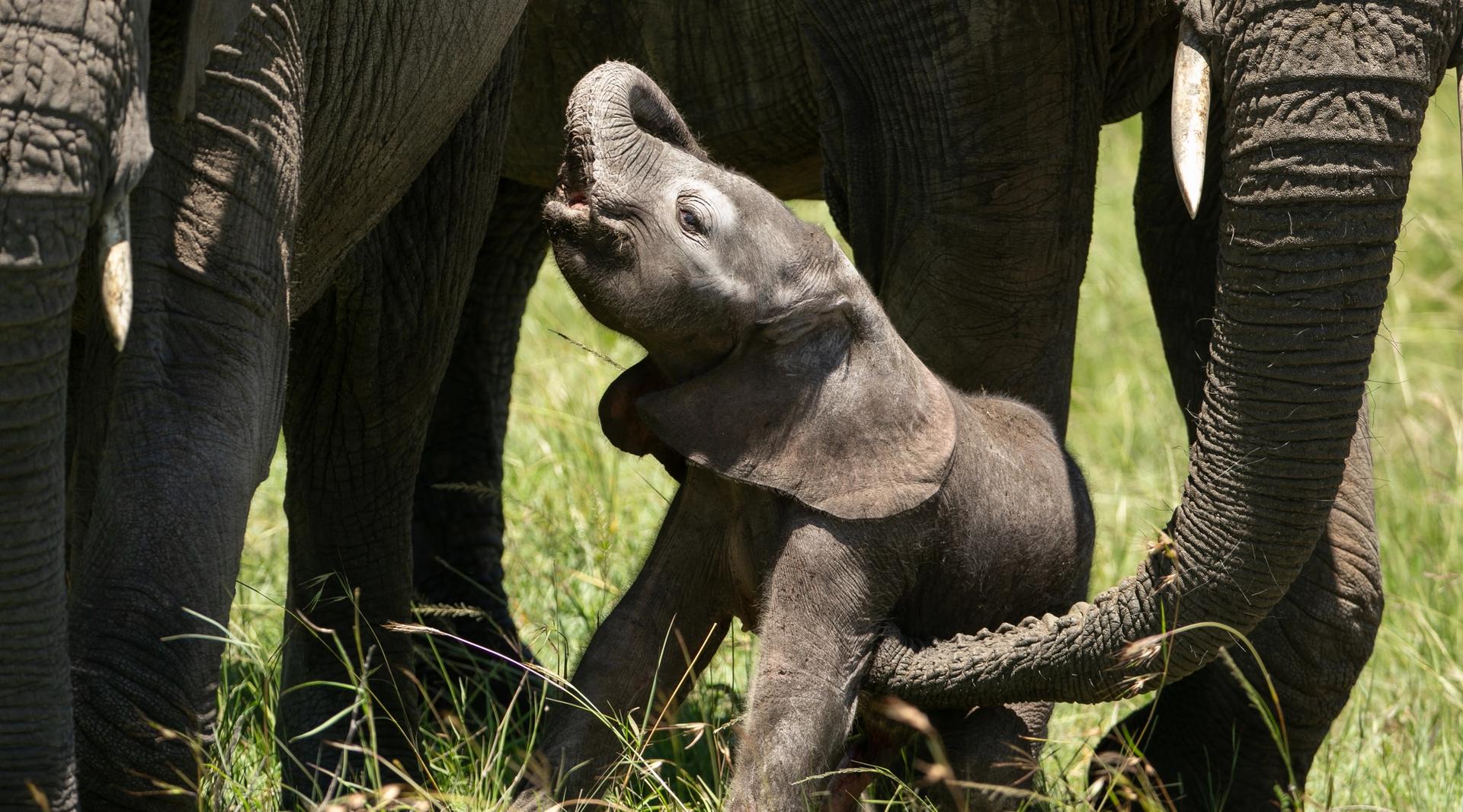
Juvenile females learn vital mothering skills by taking care of the calves of other mothers, or allomothering. Contact with other calves and infants and their mothers during such care-taking provides them with an array of mothering experiences that persist until they give birth to their own first calf. In addition, the presence of allomothers increase a calf's chance of survival.
Despite this practical experience, however, first-born infants show more distress, encounter more stress and have higher mortality rates than infants born to older, experienced mothers. When an inexperienced female gives birth for the first time, experienced females come to her aid, and by their behavior help her to deal with the physical demands of birth. Other family members seem to understand that first time mothers have less experience, because these young mothers receive more help in the protection and rearing of the newborn calf than do older mothers.
Knowledge gained from experiences over a succession of births may play a major role in successful calf rearing. More experienced mothers appear to be more sensitive to calf demands for food and protection and this knowledge has obvious consequences for calf growth and survival.
Studies of orphaned and translocated elephants provide powerful evidence for the importance of social learning. In Pilanesberg National Park, South Africa, adolescent males who had been orphans from Kruger National Park culls displayed unusually high levels of aggression toward rhinos, mounting and frequently goring them. The introduction of mature male from Kruger reduced this abnormal behavior, demonstrating the stabilizing and influence of older males and the importance of role models.
Read about our study in Pilanesberg, South Africa
Older bull elephants control young males: Orphaned male adolescents go on killing sprees if mature males aren't around
In Tsavo East National Park, elephants rehabilitated by the David Sheldrick Wildlife Trust gradually integrated into wild populations. Interactions with older elephants helped them learn about new food sources, seasonal movements, and risk avoidance. Research increasingly shows that elephants embedded within strong social networks experience lower stress levels and higher reproductive success. Social integration is therefore not merely social; it has direct consequences for survival and fitness.
Elephants exhibit population-level behavioral differences that are best understood as cultural variation, meaning behaviors that are socially transmitted and persist across generations. Distinct migration routes are maintained over decades. In areas bordering agriculture, techniques for dismantling electric fences can spread between males. On Mount Elgon, elephants have excavated extensive cave systems in pursuit of mineral-rich salts, a tradition maintained over generations.
Human pressures also shape socially learned responses. In regions where elephants have experienced repeated spearing or harassment, they show heightened defensive behavior and altered risk assessment compared to populations without such history. These patterns suggest that elephants transmit information about risk and opportunity socially, creating locally distinct behavioral traditions.
Research on the elephants of Gorongosa National Park in Mozambique provides a particularly compelling example of how extreme human pressure can shape socially transmitted behavior. During the civil war, elephants in Gorongosa were heavily poached, and survivors lived for years under intense, lethal threat. In the decades following the war, observers documented unusually high levels of aggression and defensive reactivity among some family groups, particularly toward vehicles. This pattern appears not simply to reflect individual trauma, but to represent socially reinforced behavior transmitted across generations. Calves growing up in these families are exposed to heightened vigilance, rapid flight responses, and, in some cases, proactive aggression. Over time, such responses can become embedded as group-typical behavior — effectively a culture of aggression shaped by prolonged violence. The Gorongosa case illustrates how elephant societies do not merely respond individually to disturbance, but can collectively internalize and transmit behavioral adaptations to extreme risk environments.
Read about our study
A culture of aggression: The Gorongosa elephants’ enduring legacy of war
Although elephants are not habitual tool users in the way some primates are, they demonstrate flexible object manipulation and imitation. Asian elephants have been observed modifying branches by removing leaves and adjusting length to create effective fly switches. Juveniles attempt to replicate this behavior, with skill improving as coordination develops. Experimental research further shows that elephants can solve cooperative tasks and understand cause-and-effect relationships, capacities consistent with advanced social learning.
In the Mara some young elephants had a tradition of standing over Croton bushes. We observed them gathering the branches up with their forelegs and clambering over the bush, as if they were standing over and protecting an infant. There was some evidence that this behavior was imitated by nearby juveniles.
In 2005, Poole and colleagues provided the first clear evidence that elephants are capable of vocal learning — the rare ability to modify vocalizations by imitating novel sounds. A young African elephant named Malaika imitated distant truck noises, while a captive African male named Calimero copied the chirping calls of Asian elephants with whom he was housed. Subsequent reports documented elephants producing unusual sounds such as humming, whistling, and other novel vocalizations (listen to some of these on The Elephant Ethogram).
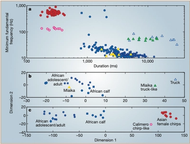
Read about our discovery that
Elephants are Capable of Vocal Learning
One particularly striking case involved an Asian elephant named Kosik, who imitated Korean human speech by inserting his trunk into his mouth to alter vocal tract shape. Published in Current Biology in 2012, this work demonstrated vocal flexibility that places elephants among a small group of mammals — including humans, cetaceans, bats, and pinnipeds — capable of vocal imitation. Vocal learning likely contributes to social bonding and may play a role in maintaining group-specific vocal characteristics.
Allen CRB, Brent LJN, Motsentwa T. et al. 2020. Importance of old bulls: leaders and followers in collective movements of all-male groups in African savannah elephants (Loxodonta africana). Sci Rep. 10: 13996. https://doi.org/10.1038/s41598-020-70682-y
Bradshaw GA, Schore AN, Brown JL, Poole JH, Moss CJ. 2005. Elephant breakdown. Nature. 433:807. https://doi.org/10.1038/433807a
Goldenberg SZ, Douglas-Hamilton I, Wittemyer G. 2016. Vertical transmission of social roles drives resilience to poaching in elephant networks. Curr Biol. 26:75–79. https://doi.org/10.1016/j.cub.2015.11.005
The largest video and audio library of elephant behaviors.
Social Learning Content