
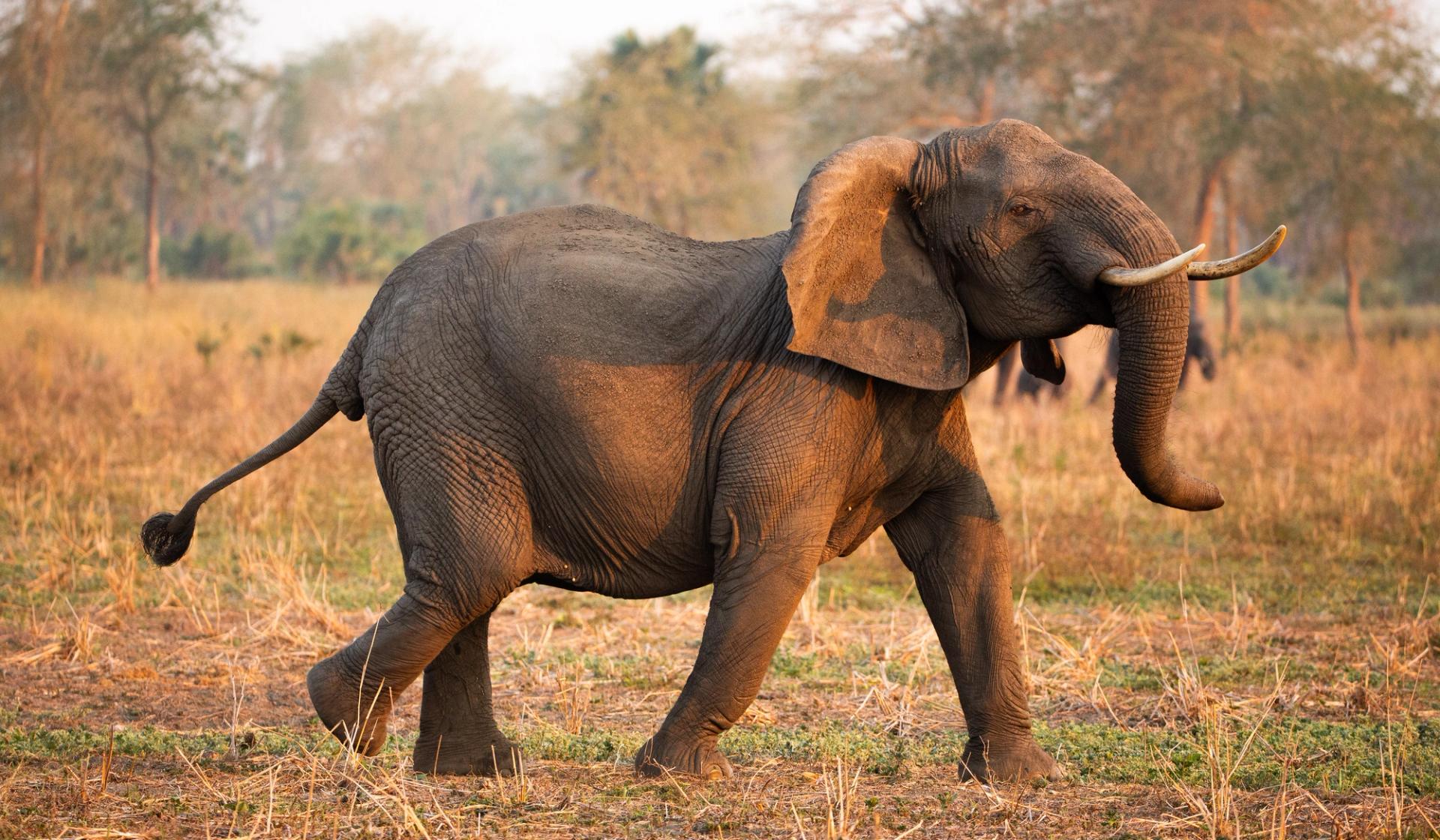
Elephants possess strong and stable individual personalities. These enduring behavioral tendencies influence how elephants interact with one another, how they are perceived within their families, and how effectively they shape collective decisions. Within any elephant family, individuals differ consistently: some are outgoing and highly social, while others interact more selectively; some are confident leaders, while others adopt more deferential roles. These differences are not random — they are recognizable across years and contexts, forming a meaningful part of each elephant’s identity.
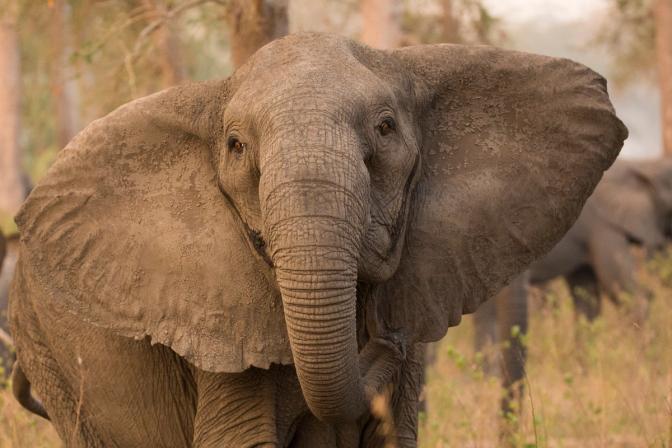
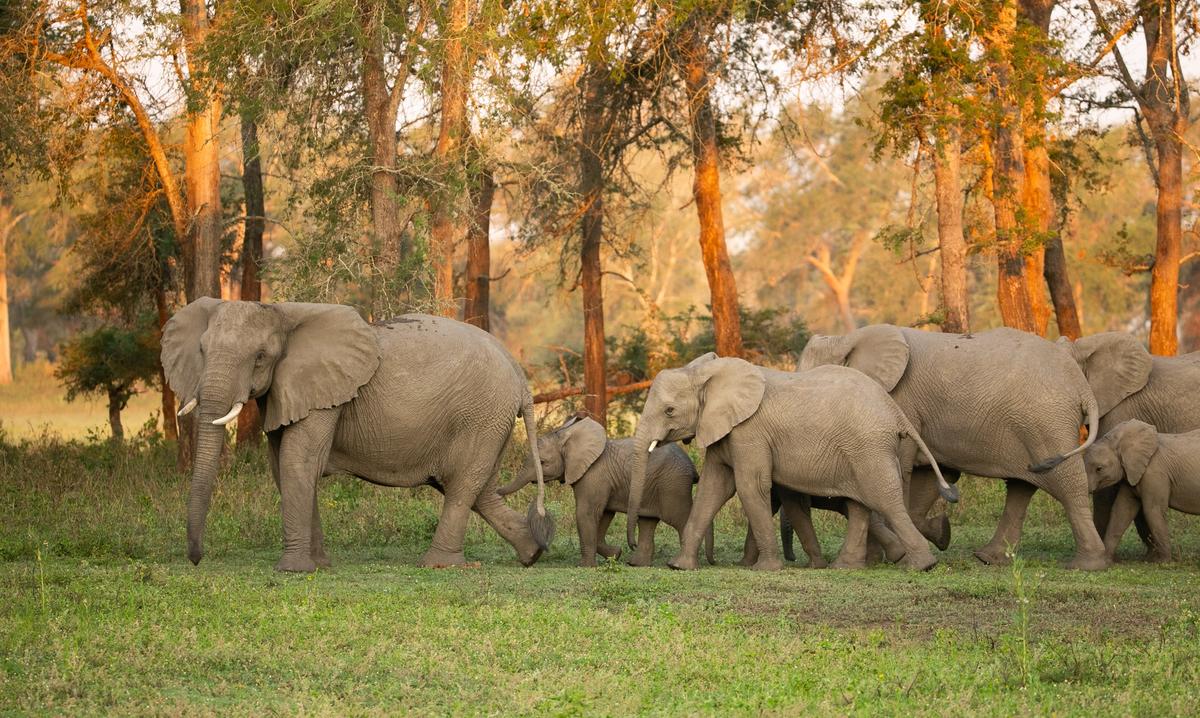
Gorongosa matriarch, iJunia, demonstrates as her family walks on behind her.
Personality plays a particularly important role in leadership and social influence. Certain individuals — often older, experienced females - exhibit calm, decisive, and socially attuned behavior that makes them reliable guides during moments of uncertainty and risk. Others may be more reactive, cautious, or less central to group coordination. Likewise, patterns of affiliation vary: some elephants are widely preferred companions, while others maintain a smaller network of social partners. These patterns contribute to the structure and cohesion of elephant societies and can affect the survival and wellbeing of calves. Furthermore, calves with more confident, socially connected mothers are more exploratory and socially engaged. Adult males, too, show distinct personalities, some forming strong, long-term associations with particular companions while others are more solitary.
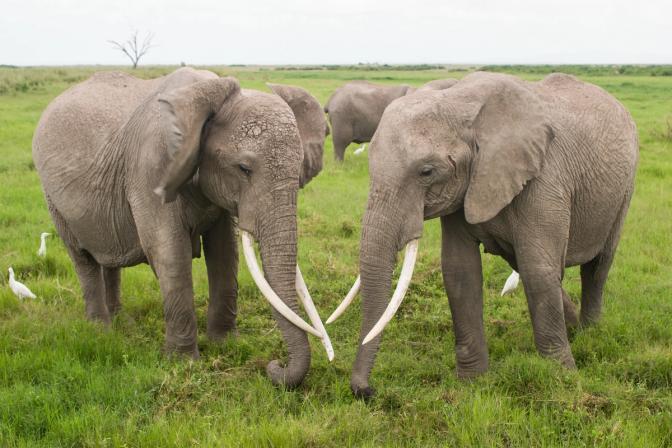
Echo and her second eldest daughter Enid graze side by side. As a young female Enid showed strong leadership qualities and became matriarch after her mother's death in the drought of 2009.
To better understand these individual differences, researchers from the Amboseli Elephant Research Project adapted a personality questionnaire originally designed for humans and applied it to the adult members of Echo’s family. Each elephant was rated on a series of traits — active, aggressive, apprehensive, confident, curious, deferential, eccentric, and others — using a 1–7 scale. The resulting profiles aligned closely with decades of field observations, demonstrating that elephants exhibit measurable, biologically meaningful variation in personality.
The Matriarch, Echo, and her daughters all scored high on traits representing leadership, social engagement, and integration within the family unit as a whole. Subsequent research has confirmed that personality influences maternal style, social bonding, leadership effectiveness, responses to risk, and even reproductive outcomes. Older elephants, in particular, combine long-term knowledge with distinctive temperaments that affect how families navigate environmental change, assess threats, and maintain cohesion.
Understanding personality provides insight into the complexity of elephant societies and underscores the importance of each individual. Personality is not merely an interesting trait — it is part of the behavioral fabric that shapes how elephant families function, learn, and thrive across generations.
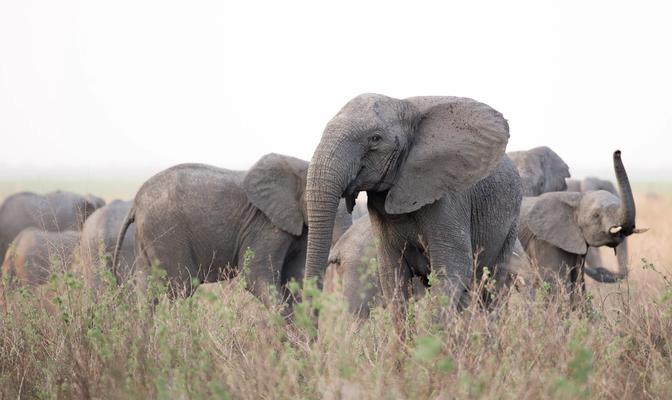
Matriarch of Gorongosa's C family acts as Rear-Guard for her relative.
No individual has more influence on family structure and fortunes than the matriarch — the female leader of an elephant family. Matriarchs are typically the oldest and often the largest adult female in the group, though age alone does not guarantee effective leadership. In some families, leadership is unmistakable: the matriarch is the individual others orient toward, whose movements they monitor, and whose guidance they follow in moments of challenge. In other families leadership may be more subtle, shared, or at times contested. These differences reflect a combination of personality, kinship, historical experience.
Matriarchs express their dominance in both competitive and cooperative contexts. Contrary to early assumptions, elephant leadership is rarely autocratic. While a matriarch may make suggestions about movement or activity, any adult — and occasionally even a juvenile — may propose a plan of action. Such proposals may be ignored, discussed, negotiated, or simply adopted. It is true that a matriarch’s suggestions tend to elicit less debate than those of other family members, but even she must sometimes argue her case. And in many situations, the collective will of the group overrides her opinion. Elephant decision-making, far from being top-down, is a rich social negotiation.
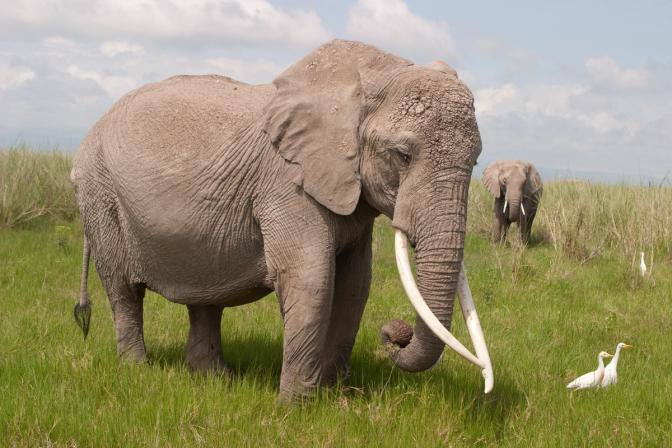
Amboseli matriarch, Echo, was Amboseli's most celebrated elephant, appearing in numerous documentary films.
Natural leadership qualities — rooted in personality — combined with long experience make a wise and effective matriarch. Individuals in families led by older, experienced matriarchs generally fare better, often enjoying higher survival rates. Yet not all matriarchs excel. Some families fracture after a matriarch’s death, suggesting that conflict over the successor or weak social ties can undermine cohesion.
What makes a good matriarch? While there is no single formula, successful leaders tend to share several qualities. They are socially and genetically well-connected to their families. They show consistent care and consideration for all members of their group — not only their own offspring. They demonstrate courage and calm during crises; recall complex landscapes and past events; navigate threats with strategic insight; and maintain strong social bonds through frequent reassurance, tactile communication, and skilled conflict management.
References
Lee PC. 2011. Personality in elephants. In: Moss CJ, Croze HJ, Lee PC, editors. The Amboseli elephants: a long-term perspective on a long-lived mammal. Chicago (IL): University of Chicago Press.
Lee P, Moss C. 2012. Wild female African elephants (Loxodonta africana) exhibit personality traits of leadership and social integration. J Comp Psychol. 126:224–232. 10.1037/a0026566

The largest video and audio library of elephant behaviors.