
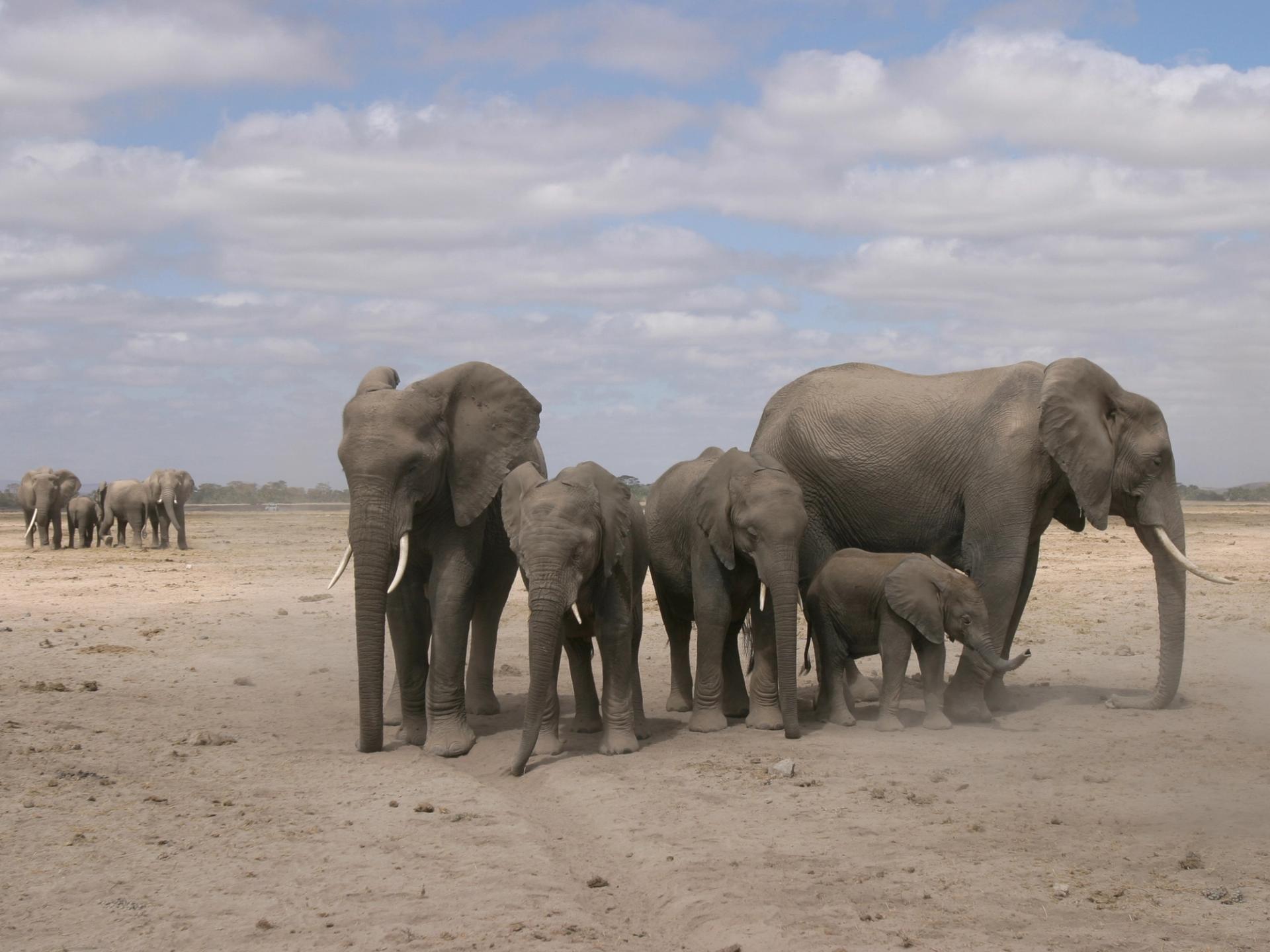
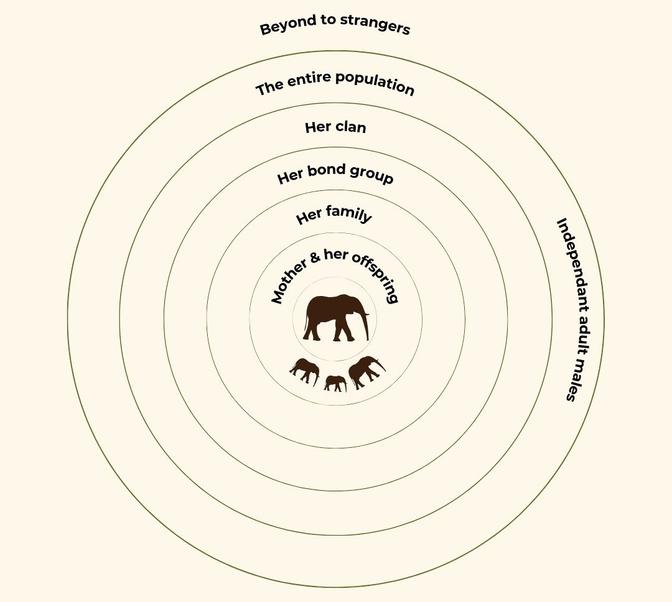
Afrian savanna elephants exhibit one of the most complex social systems known among mammals. Their society is structured as a multi-tiered, fission-fusion network in which individuals maintain differentiated social relationships across families, bond groups, clans, and the wider population. These relationships are shaped by kinship, long-term social bonds, reciprocal cooperation, and extensive social memory. Despite frequent changes in group composition, elephants sustain enduring affiliations through sophisticated communication, individual recognition, and coordinated social behavior. Their unusually long lives, cognitive abilities, and capacity for long-distance communication enable the maintenance of large and dynamic social networks, providing a unique opportunity to study the evolution of social complexity, cooperation, and collective decision-making in a long-lived species.
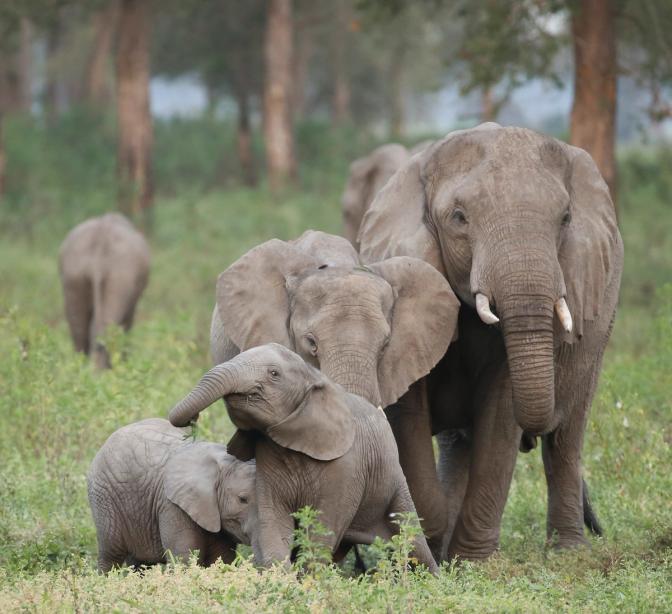
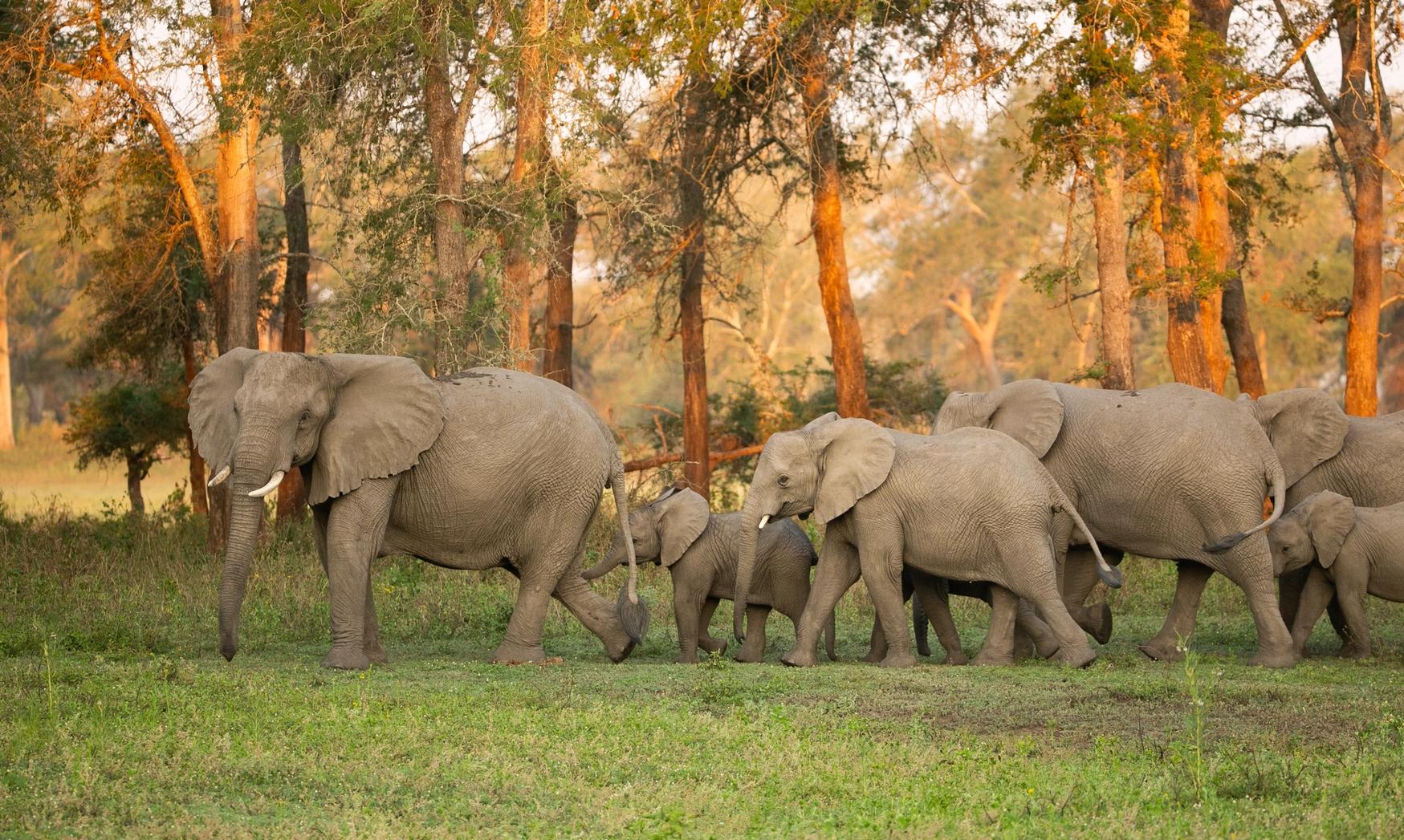
Valente and her calves interact in Gorongosa.
An elephant family consists of one or more, usually related, adult females and their immature offspring who feed, rest, move and interact in a coordinated manner and have close and friendly ties. Members of a family show extraordinary teamwork and are highly cooperative in group defense, resource acquisition, offspring care, and decision-making. Day to day decisions involve broad participation including consensus building.
Families maintain their cohesion through a rich repertoire of tactile, visual, chemical, and vocal signals, including characteristic contact rumbles when members are separated and engage in greeting ceremonies when relatives reunite.
Elephant families, or family units, may consist of as few as two or as many as 50 or more individuals, including anywhere from 2 to 16 adult (>10 years) females and their dependent offspring. A matriarch, usually the oldest and most respected female, leads each family.
Elephants live in a fission-fusion society — a social structure in which group size and composition changes dramatically, with individuals forming and splitting into larger or smaller subgroups through the course of a the day or over the year. So, while families are composed of a discrete, predictable composition of individuals, over the course of hours or days, these groups may temporarily separate and reunite or they may mingle with other social groups to form larger social units — much like our own families. At any particular point in time a family may or may not be in together in one group. And, logically therefore, a group may or may not describe elephants who belong in a family.
The term fission-fusion refers both to the slow changes in the structure of families (or bond groups) that occur over the course of years or decades and the very rapid changes that occur in social group composition over the course of hours.
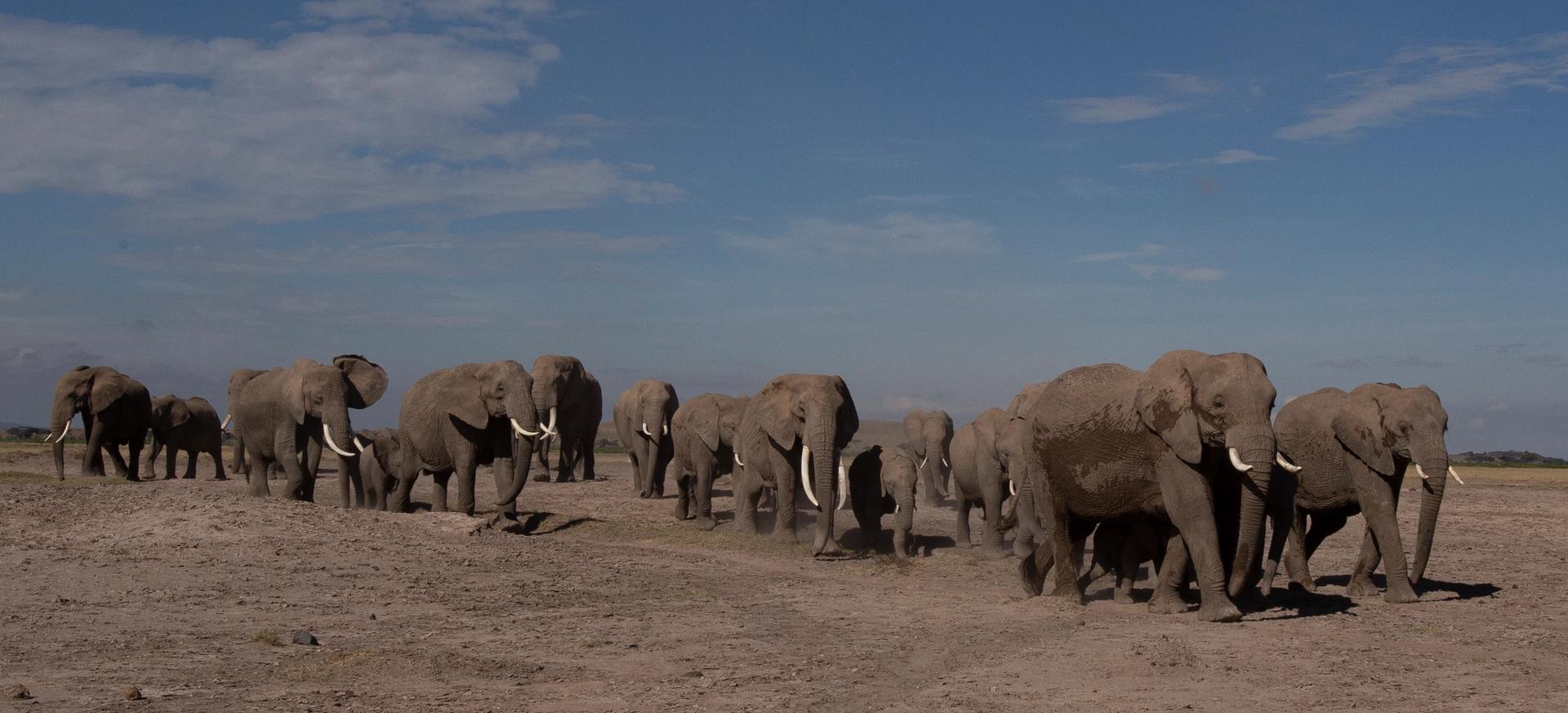
A family is one or more adult females and calves with a high frequency of association over time, who act in a coordinated manner and exhibit affiliative behavior toward one another.
A group is any number of elephants of any age or sex moving together in a coordinated manner at a specific moment in time. A group may be adult females and their calves, adult males or both.
Above the level of the family unit lies a broader social tier of relationships known as a bond group, which may include as many as five or more families, and up to 50 or more individuals. Bond groups typically emerge as families grow and gradually split along matrilines. In other words, mothers, daughters and sisters are most likely to stay together, while the fissures tend to divide cousins. As a result, across these families older members are often genetically related, but the connections between individuals are less tightly woven than within families.
In any environment, there is an optimal family size for which the advantages of group living outweigh the costs of competition for limited resources. When resources become scarce or when families grow very large, the balance can shift and families may begin to split — especially during periods of low food availability.
Families that share the same dry-season home range belong to a clan. Clans typically include several bond groups and many families, sometimes comprising several hundred elephants.
During the dry season, when food and water are limited, families generally remain within their clan’s traditional range. When resources are abundant, however, elephants gather in much larger social aggregations, moving freely across the landscape where food is plentiful and social opportunities are rich. Under these favorable conditions, clans often intermingle, and individuals from different clans may spend extended periods together. As long as resources allow, elephants frequently choose to be in these large, socially vibrant groups.
Although clan membership is generally stable, long-term research shows that elephants are not bound by rigid social rules. For example, some Amboseli families still use the same dry-season ranges they occupied decades ago, while others have changed clans, altered bond-group memberships, or even joined entirely new families.
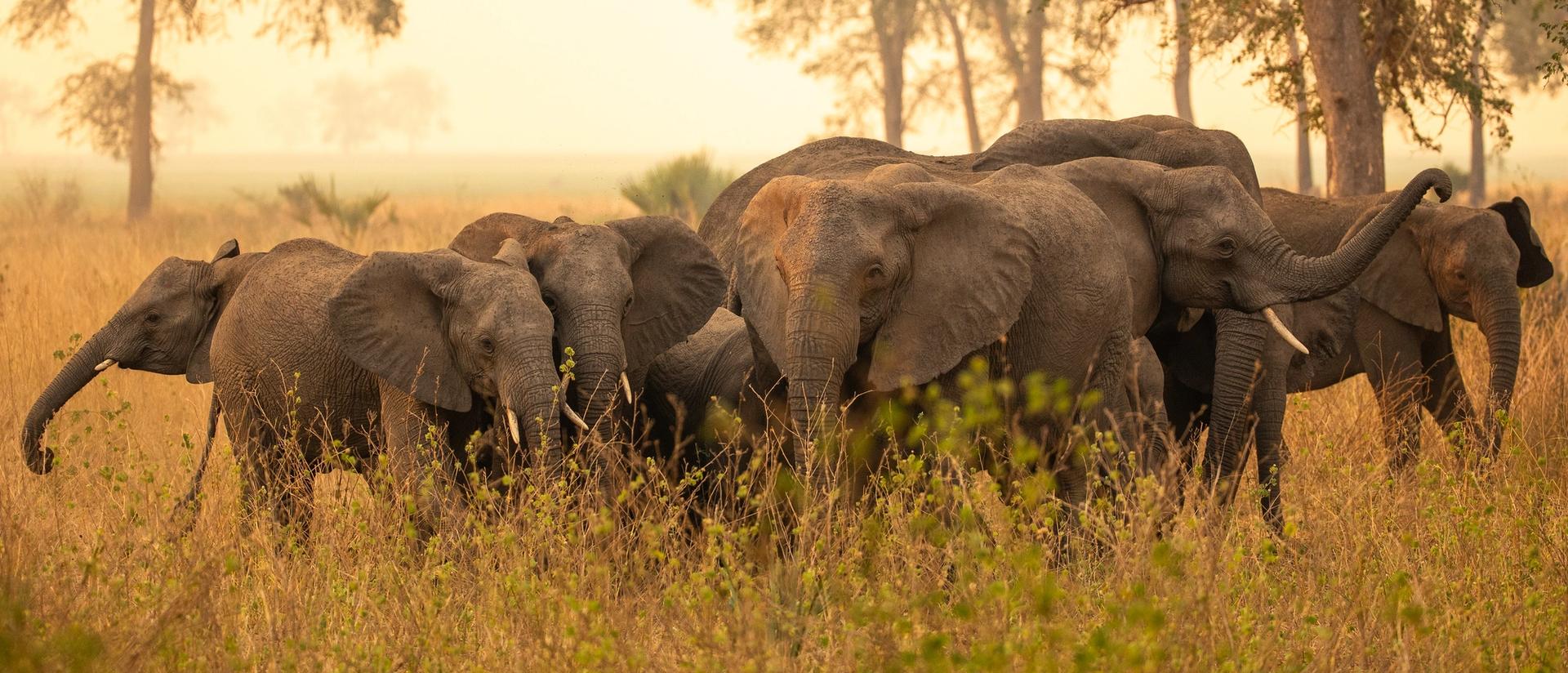
An elephant population can be defined as a community of individuals connected through patterns of foraging, mating, parenthood, and shared space. Members of a population typically use the same broad landscape, interact socially, and exchange gene flow. Although these boundaries are often shaped by ecological features such as mountains, rivers, forests, or human settlement patterns, elephant populations rarely form perfectly closed units.
For example, the Amboseli elephant population utilizes a cross-border landscape of Kenya and Tanzania around the northern and northwestern slopes of Kilimanjaro. These elephants interact with several neighboring populations, including the Kilimanjaro Forest and Kitumbeini populations in Tanzania and the Tsavo population in Kenya. While there is some gene flow between them, it remains limited, and each population retains its own distinct social structure.
Recent satellite tracking studies have shown that independent Amboseli males occasionally travel even farther, overlapping with elephants 200 km away from Loita Forest, Shompole, and Mosero — and returning — illustrating how fluid and wide-ranging elephant movements can be.
Understanding population structure is essential for conservation. Seemingly separate elephant groups may be connected by the occasional movements of males or family units, while others that appear geographically close may remain genetically isolated because of barriers such as roads, fencing, or expanding agriculture. Protecting elephant populations requires safeguarding not only core habitats but also the movement corridors and linkages that allow elephants to travel, mix, and maintain healthy genetic diversity.
Archie EA, Moss CJ, Alberts SC. 2005. The ties that bind: genetic relatedness predicts the fission and fusion of social groups in wild African elephants. Proceedings of the Royal Society B: Biological Sciences. 272:513–522. https://doi.org/10.1098/rspb.2005.3361
Archie EA, Morrison TA, Foley CAH, Moss CJ, Alberts SC. 2006. Dominance rank relationships among wild female African elephants, Loxodonta africana. Animal Behaviour. 71:117–127. https://doi.org/10.1016/j.anbehav.2005.03.023
Charif RA, Ramey RR, Langbauer WR Jr, Payne KB, Martin RB, Brown LM. 2005. Spatial relationships and matrilineal kinship in African savanna elephant (Loxodonta africana) clans. Behavioral Ecology and Sociobiology. 57:327–338. https://doi.org/10.1007/s00265-004-0867-5
The largest video and audio library of elephant behaviors.