
| The Amboseli elephants |
|
|
|
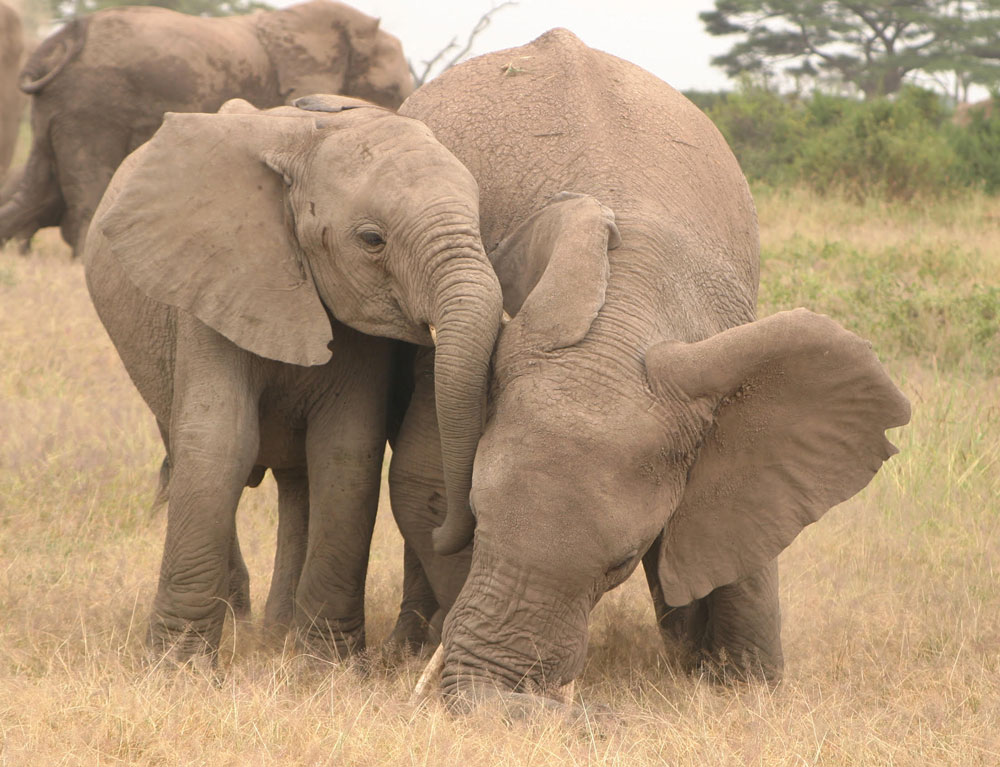
The best-known free-ranging elephant populationAmboseli's some 1,200 elephants (2011 figure, down from 1,600 in 2008 due to severe drought and poaching) include 58 families and close to 300 independent adult males. Each individual has been named, numbered, or coded and can be recognized individually. There are photographic recognition cards of every adult and of most juveniles over seven years old. Younger calves can be recognized in the context of their families. This degree of recognition makes the Amboseli elephants the best-known free-ranging population in the world. For almost four decades the elephants of Amboseli were spared the widespread scourge of ivory poaching. It was one of the few populations in which animals span the whole age range from newborn calves to wise old matriarchs in their late 60s, and more unusual, many large bulls in their 40s, 50s and even 60s. In 2009, poaching started to increase, threatening this relatively small population important to Kenya and to the entire world. The images below are drawn from ElephantVoices Photo Database, The beauty of the Amboseli elephants. All photos ©ElephantVoices Amboseli source of baseline dataIn many parts of Africa poaching has destroyed the social fabric of elephant life by killing the older, larger breeding males and the older females, who are the repositories of social and ecological knowledge. Amboseli is an important source of baseline data on elephant social and reproductive patterns and is used as a model for assessing the status of other elephant populations in Africa and even in Asia. Echo of the elephantsEcho, the Matriarch of the primary group we observed during our comprehensive and years long communication study, died Sunday 3 May 2009. In her honor, we have put together, on a separate page, some images and vocalizations of this world renown elephant.
|
|||
| Last Updated on Sunday, 30 September 2012 12:05 |