
View by Chronology

Search News

Rss Feeds

feed-image Feed Entries
Ivory trade
Will new ivory burning help to stop the killing of elephants? Print E-mail
Tuesday, 19 July 2011 16:26

On Wednesday 20th July 2011, almost five tonnes of contraband ivory will be burned during a ceremony at Kenya Wildlife Service's Manyani Field Training School in Tsavo West National Park. The ivory is part of the June 2002 seizure that took place in Singapore. An estimated 600 elephants died to produce the 335 confiscated tusks and 41,553 hankos that will be destroyed in the pire. Hankos are seals or signature stamps used in Japan, China and Korea. The ivory was found to have primarily originated from Malawi and Zambia. ElephantVoices fully supports this move, which sends a strong signal that ivory should not be in the market.

During the 2010 Conference of the Parties (CoP15) of the Convention on International Trade in Endangered Species of Wild Fauna and Flora (CITES) in Doha, Qatar, ElephantVoices was among those orgaizations strongly opposing any trade in ivory. We argued that down-listing and more "one-off" sales would further stimulate the market for ivory and lead to increased killing of elephants (See Elephants, Ivory, and Trade (395.07 kB). In an important victory for elephants, CITES voted against requests from Tanzania and Zambia to down-list their elephant populations and sell their stock-piles.

ElephantVoices standpoint is that the potential global market for ivory is far greater than the amount the entire world population of elephants can supply. Any market for ivory will stimulate increased demand and, therefore, a spiraling illegal trade and further killing of elephants. We believe that the market for ivory is impossible to control and to satisfy, and that previous sales have just driven up demand, established more smuggling routes and a growing carving industry. The result of recent sales and the surrounding speculation, has stimulated demand, which is now having deadly consequences for ten thousands of elephants every year.

ElephantVoices urges governments and law enforcement agencies around the world to act forcefully to curb the current boom in illegal sales, smuggling and poaching - and we hope that the symbolic ivory burning on 20th July will inspire people and countries to work together to protect elephants.

The ivory burning is the fourth of its kind after Kenya's in 1989 (12 tonnes) and in 1991 (6,8 tonnes, see below), and in Zambia in 1992. African governments have recently been asked to join forces to fight poaching and other environmental crimes as way of protecting their economies. The ivory burning in Tsavo on 20th July is the first regional exercise of this kind. Kenya's President Mwai Kibaki will preside over the burning, which is the climax of the first-ever African Elephant Law Enforcement Day celebrations on the theme: ‘Fostering cooperation to combat elephant poaching and ivory trafficking in Africa’. The day is meant to recognise the plight of the endangered African elephant, and to celebrate its importance and appreciate challenges faced in its conservation. The burning of the ivory was a decision of the Lusaka Agreement Governing Council in line with CITES.

- Media coverage ivory burning 20th July 2011 (Google search "ivory burning, Kenya")
- Read more about ivory and poaching on Elephants killed for ivory (ElephantVoices)
- Selected links ivory and poaching (Updated list on ElephantVoices)

On 18th July 1991 - designated as Elephant Day - Kenya held her second ivory burning. It was preceded by an elaborate parade through the streets of Nairobi, demonstrations by school children and speeches by VIPs. Kenya was celebrating the result of the 1989 burning, the ban on ivory trade and the Appendix I listing; elephant poaching was already way down.

As then Elephant Program head ElephantVoices' Joyce Poole organized the parade and the ivory burning on behalf of Kenya Wildlife Service. She has fond memories of this special day. This year's burning comes at a time when poaching is spiraling out of control. We are extremely disturbed by the current boom in illegal trade and poaching.
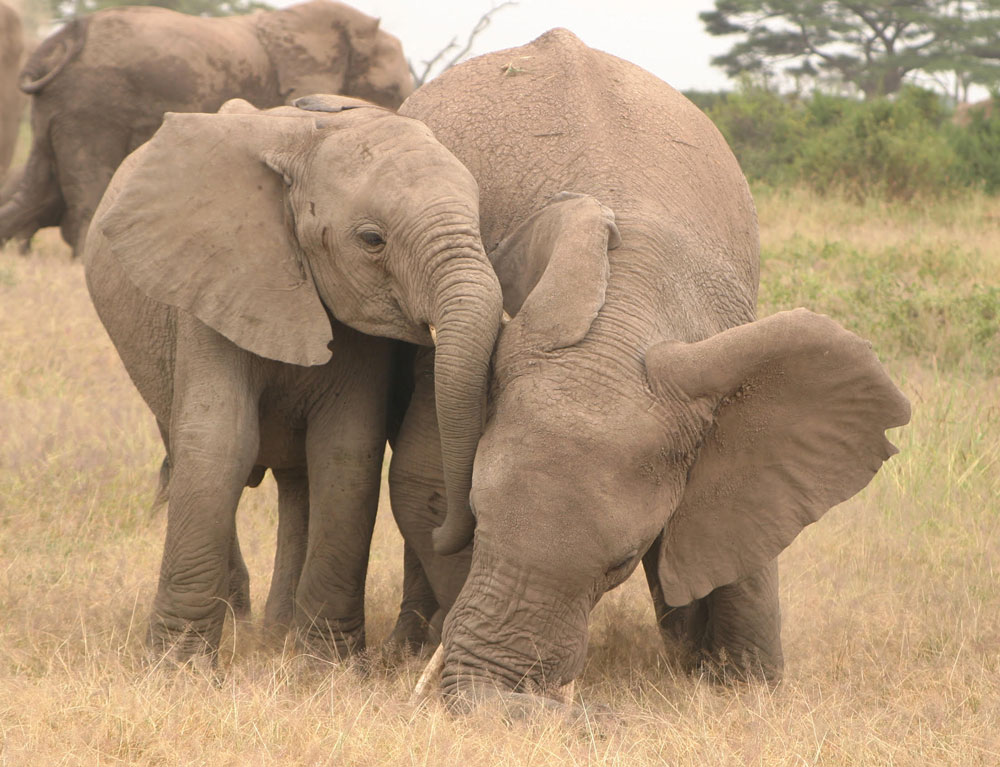
(All photos ElephantVoices)
Last Updated on Tuesday, 19 July 2011 22:37
 
Wealth, not poverty, is the driver of elephant killings Print E-mail
Tuesday, 14 September 2010 00:00

The ivory trade is, once again, the biggest direct threat to the welfare and survival of elephants. Between now and the 16th Conference of the Parties in Bangkok in 2013, ElephantVoices will be working hard on messaging: We want the people who might be tempted to buy ivory to make the connection between their purchase and the deaths of individuals.

As Manchester University political scientist, Rosaleen Duffy, recently commented, "Rather than focusing on poverty as a driver of poaching, we need to look at wealth. Poachers are servicing markets in the wealthy world, in this case in East Asia".

Back in 1988 Joyce Poole and Cynthia Moss helped to initiate a highly successful media campaign, whose slogan was, "Only Elephants Should Wear Ivory". Joyce travelled to Japan and Hong Kong, then the primary markets for ivory, and spoke to ivory carvers and merchants and government authorities. The public awareness campaign and Kenya's highly publicised burning of 12 tons of ivory captured the world's attention. Demand for ivory plummeted and the market collapsed. The killing of elephants all but stopped - for a few years.

Due to rapidly increasing human populations everywhere, elephants have been pushed into smaller and smaller spaces, and it is certainly true that this has led to conflict between people and elephants in many areas. In the mid 1990s the media began putting out a simplified massage: "there are too many elephants". The indirect message was - the elephants have recovered, it's OK to buy ivory again. Many African countries began playing the "poverty card" claiming that elephants were exacerbating poverty and that the sale of ivory would help people. The result? A resurge in the demand for ivory. It began slowly and has gathered pace.

And now? It's wide-spread elephanticide once more. But this time there is a new and uneducated market. The explosion of wealth in China is a driving force behind the increased demand for ivory and the rising slaughter of elephants. And, with ivory available, there are willing buyers all over the world. This is why YOU can make a difference. It is not about stopping poachers in the bush, but about stopping buyers in the towns. We urge all of you to use your voice to help us to get the message out. Especially those of you with a network in China and Eastern Asia - help us by translating our posts into Chinese, Japanese. Use your own network to pass the message on; influence anyone who might be tempted to buy ivory, or who might have any say in how your country votes on elephants at CITES. We won a victory in Doha in March this year, but the struggle for elephants survival will continue.

Together our voices can put an end to the killing of elephants for their tusks.

The ivory trade - It's SO much more than numbers.......

Wildlife managers, conservationists, and those who argue for keeping a vibrant trade in ivory, like to talk numbers. How many tons of ivory can elephants produce through natural mortality? How much money can be made from the sale of ivory? How many tons are held in ivory stockpiles? How many elephants are killed to supply the illegal market? Are elephant numbers increasing or decreasing in this country or that?

But very few of these experts talk about what these numbers mean to the survival and well being of individual elephants. The welfare implications to these individual building block of societies are not even acknowledged as people, organisations and nations barter away lives at international conferences.

More than 1,5 tonnes of ivory shipped from Tanzania was recently seized in Hong Kong. DNA will confirm which populations were mined by the killers attempting to satisfy the growing Asian market. An editorial from the 11th September edition of the Tanzanian newspaper, The Citizen, remarks that 11.6 tons of the ivory seized over the last 18 months originated in Tanzania. The article calls on the government to take urgent measures to disassociate the country from trafficking networks.

Eleven and a half tons is only the tip of the iceberg. Smuggling occurs when there is a fair chance that contraband will reach its destination and figures suggest that only 10-15% of shipments are detected. The true figure is likely to be more like 116 tons.

One ton of ivory = 135 dead elephants
and much, much more...

  • Males with big tusks killed = skewed sex ratios
  • Elephant with big tusks killed = Loss of older, experienced members of society
  • Mothers killed = catastrophic for lifetime survival and well being of her calves
  • Matriarchs killed = compromised survival of remaining members
  • As these older, more experienced elephants killed = fabric of elephant society destroyed
  • Enormous suffering

Slide from our talk at symposium Compassionate Conservation, 2 Sept. 2010,
arguing
that many forget the enormous welfare implications behind the cold
figures related to the ivory trade.

Go directly to talk here.

But let's just stick to what we know - the 11.6 tons. How many lives does that represent? The average weight of tusks in trade is something like 3.7 kg. Some elephants have only one tusk so the standard is to use 1.8 tusks per elephant. Therefore, 11.6 tons is equivalent to some 1,742 elephants. But, if estimates are correct it could be ten times that - 17,000 deaths - just based on Tanzania. And we know that the killing is far worse in parts of central Africa.

The Domino Effect

The tusks of adult males are seven times the weight of those of adult females of the same age. So poachers start mining a population by killing adult males. The result? The sex ratio of poached populations are highly skewed toward females. Data show that populations being poached in Tanzania today are already highly skewed, which means that perhaps two thirds of the 1,742 (or if you want to extrapolate, 17,420) elephants who died were female. Let's use a round figure of 1,000 (or 10,000 for the extrapolators) adult females. What happened to the children of these mothers?

Elephant calves are heavily dependent upon their mothers. Calves under two die if their mothers die. Indeed up to the age of 8 or 9, being orphaned is catastrophic for lifetime survival and well-being. Most adult females have at least two offspring under the age of 9. So for each female who dies, you can count at least one calf death and frequently two. It would be safe to assume that the number of elephant deaths may double the figure represented by the seized tusks. The 11.6 tonnes is likely to represent the deaths of 2,500-3,000 elephants (or 25-30,000 elephants).

We may not know these individuals by name, we may not recognize their faces, their voices, their smell. But they had families - sons, daughters, mothers, grandmothers who remember them, who have suffered and continue to suffer. These individuals care what we are doing to their societies.

Do any of our policy and decision makers care? Do the ivory merchants and the ivory buyers care? Do you care?

The time for compassion is NOW

We believe that that time for change is now! There are too many people on our planet to continue to promote greed for the body parts of animals. We must begin to engender compassion for the other individuals who share our world.

Some telling headlines from recent media coverage you should read - you find these articles and many others here.

  • Demand from wealthy makes elephants unfair game
  • Tanzania: Ivory Seizure Wake-Up Call to Wildlife Officials
  • Hong Kong: Ivory tusks worth $10.85m seized
  • South Africa: Top parks official accused of poaching
  • Uganda: Elephants suffer as UWA top brass fight

Last Updated on Tuesday, 14 September 2010 10:01
 
Letters published in Science debate impact of the ivory trade on elephants Print E-mail
Tuesday, 29 June 2010 00:00

Science Opinion Piece 12. March 2010: Elephants, Ivory, and TradeOn the day before the CITES (CoP15) meeting opened in Doha in March, we published an opinion piece against the ivory trade together with 25 other scientists. The piece, published in the Policy Forum section of Science, was entitled, Elephants, Ivory, and Trade (395.07 kB).

In the 25 June 2010 issue of Science you can read a rebuttal by John Frederick Walker and Dan Stiles. In the same edition several of us - Samuel Wasser, Katarzyna Nowak, Joyce Poole, John Hart, Rene Beyers, Phyllis Lee, Keith Lindsay, Gardner Brown, Petter Granli and Andrew Dobson have written a response to their arguments. You can read and download both the rebuttal and our response here (507.73 kB).

Our initial piece argued that CITES' member states should reject the proposals from Tanzania and Zambia requesting down listing of their elephant populations and further sales of ivory. After a heated debate this is, indeed, what happened.


Last Updated on Tuesday, 29 June 2010 08:54
 
Elephants did well in Doha - but continue to need your help Print E-mail
Wednesday, 24 March 2010 10:57

We are extremely happy to report that elephants did well at CITES' CoP15 in Doha, Qatar. But, we are well aware that while the battle was won, the war against the ivory trade and for elephant conservation in general is an on-going one. Poverty, greed, poor governance, habitat loss and lack of law enforcement are among the many factors threatening the future of elephants and interacting with the ivory trade with devastating effect.

Our inspiration to fight on comes from the elephants themselves. We cannot win, though, if elephant range states are not willing to put a higher value on live rather than dead elephants. CITES is a convention set up to prevent the over exploitation of species by trade (though sometimes the opposite seems true); it is not meant to deal with issues of poverty, population growth or land use planning. Some countries always play the poverty card, though. While we do not buy the argument put forward over and again from southern Africa that elephants "have to pay to stay", we do recognize that we will lose elephants if local governments are not able to balance out the needs of people with those of elephants and wildlife in general.

Major achievement for elephants

As usual, elephants dominated the CITES Conference and at certain times the atmosphere was extremely tense. Requests from Tanzania and Zambia to down list their elephants populations from Appendix I to II and to begin to trade in ivory were both rejected. Tanzania and Zambia amended their proposals when they realized that they might lose the vote, but despite well orchestrated interventions by supporting parties they did not succeed in achieving the two thirds majority required. We firmly believe that down listing and "one-off" sales would have further stimulated the market for ivory, and led to more killing of elephants. They did succeed in getting another vote in the plenary session today, Thursday 25th, but the victory for elephants was upheld.

We feel that our participation was a major achievement for elephants and for ElephantVoices. While at CoP15 in Doha ElephantVoices and Save the Elephants prepared and distributed a statement to the delegates arguing that the biological criteria for down listing of Tanzania's and Zambia's elephant populations had not been met. We received an enormous response to a science-based presentation by Iain Douglas-Hamilton, Sam Wasser and Joyce which countered some of the claims by the CITES Secretariat. The day before the vote more than 350 CITES participants squeezed into the meeting room with tens more having to turn around at the door for lack of space. We heard from many delegates that the presentation was an eye opener, and it is probably fair to state that it had a significant impact on what transpired later. We believe that our presentation helped influenced the EU to vote against Tanzania and to abstain in the Zambian vote which meant that they did not get the 2/3 majority required.

A magnificent team for elephants

KWS' Patrick Omondi during CoP15 intervention Our main collaborator during CoP15 was the African Elephant Coalition (AEC, with 23 African elephants range states as members), and the informal group Kenya Elephant Forum (KEF) which includes key stakeholders in Kenya (Save the Elephants, Amboseli Trust for Elephants, Kenya Wildlife Service, Youth for Conservation, ElephantVoices and others) co-ordinated by Pat Awori. During our recent trips to Kenya we were able to participate in two meetings of the KEF and were in daily email contact with them leading up to the meeting. Our African friends did a great job, and KWS assistant director Patrick Omondi presented AEC perspectives in an excellent manner. We are proud being part of this magnificent team!

Over 4,000 fans are currently following us on Facebook, and during the heated discussions and thrilling vote Monday 12th we updated our Facebook Page several times - "live from the conference hall in Doha". We got lots of responses, and many interesting comments that will be reflected in our educational outreach and work ahead. Some of you might have followed the updated list of links about the ivory trade and poaching, list to CITES information and update sources and used our searchable Document Download Center to find documents relevant to the ivory trade and CITES.

After months of focus on the ivory trade we will have to re-direct some of our energy on several important welfare issues ahead. In ALL elephant work, though, whether we are talking about wild or captive elephants, the welfare perspective is one that we never forget.

We thank all of you following and supporting us in this endeavor - and look forward to continued contact!

Last Updated on Sunday, 07 October 2012 14:19
 
Will horse-trading at CITES threaten elephants' survival? Print E-mail
Friday, 19 March 2010 12:06

Our objectives for being here at CITES do not allow much time for giving comprehensive updates, nor for relaxation, for that matter. This is partly why we have given some links to other sources for CoP15 updates and related information here, and why we continue to update this page with links to media coverage about ivory trade and poaching. Take the facts and reflections in this news piece as our "one and only" proper feedback about our perspective of CITES and the CoP15 "in action". I am well aware that many of you might find the below rather technical, but in trying to reach people with different level of insight this is how it has ended up...

Friday (yesterday) was a day off in terms of the official program, and gave us a chance to catch up with important e-mails and preparations for the days and activities to come. In the evening we participated in a strategy meeting and dinner with the Afrian Elephant Coalition (AEC). A few hours ago we went to the Official Delegates' Dinner hosted by Qatar's Ministry of Environment, but raced back to our hotel for some more time on the computer after a quick meal and a couple of important conversations.

Improved CITES work processes strongly needed

It's a fact that enormous effort and money go into lobbying CITES delegates. This mean that politics, horse-trading and "friendly favors" among nations sometimes overtake CITES mandate of "ensuring that international trade in specimens of wild animals and plants does not threaten their survival." Admittedly, I don't have a good gut feeling based on how CoP15 voted against increased protection for the polar bear and the blue fin tuna.

CITES member states rely heavily on the Panel of Experts (PoE), selected by the Secretariat. Their reports on Tanzania's and Zambia's proposals for sale and downlisting (available here) were distributed, without peer review, only a few days before CoP15. They contain conclusions that we disagree with and some core facts that are wrong. We honor the hard work of the Panel, but we feel that elephants deserve a more open and less rushed process. Handing out such crucial documents a couple of days before the meeting takes place is simply unacceptable.

We have contested the Secretariat's conclusion that Zambia's and Tanzania's populations do not meet the biological criteria to remain on Appendix I in Statement from Save The Elephants & ElephantVoices regarding Tanzania's and Zambia's proposal distributed to CoP15 delegates on 18 March. The opinion piece in Science 12 March, Elephants, Ivory, and Trade, highlights the need for engagement of the wider scientific community in CITES decisions regarding the future of elephants.

We have spent most of today working hard to prepare a presentation that Iain Douglas-Hamilton, Sam Wasser and Joyce will give at CoP15 tomorrow, Sunday. It pinpoint some hard facts and figures about the ivory trade and Tanzania's and Zambia's evident role in it while also describing the long-term consequences of poaching on elephant populations. The presentation will, furthermore, document what we view as a clear relationship between CITES elephant petitions, one-off sales and illegal trade and poaching. We argue that it would be irresponsible to break the spirit of the nine year moratiorium or "resting period" on trade that was decided at CoP14.

The "bigger picture" - and welfare for the individual elephant

Qatar is one of the sunniest places on earth, but we have hardly been outside. From our hotel windows we can see huge buildings shooting up all around - what probably is the richest country in the world, considering their oil and gas reserves, is a quickly growing financial powerhouse. It admittedly feels kind of strange to discuss conservation and wildlife surrounded by overwhelming signs of trade, luxury and (over)consumption.

While CITES mainly is about the "bigger picture" and trends, we shouldn't forget the welfare of individuals. During the last couple of days we have been through slides showing numerous ivory seizures, with three huge ones from 2009 representing 17,000 dead elephants. We have seen photos from markets or shops in Nigeria, Congo, Angola, Mozambique and Egypt exhibiting ivory equal to hundreds of elephants. During the presentation tomorrow gruesome photos of elephants whose genitals have been cut off will be shown for the first time. We cannot even imagine the trauma for families whose members are amongst the 30,000+ elephants that are estimated to be killed each year.

The fight against the ivory trade is in any case not over

It is late Saturday evening - during Monday we most likely will know if CITES will follow the Precautionary Principle and give elephants a much needed benefit of the doubt. Even with a positive decision the struggle is far from over, better law enforcement is another vital factor in this trade. The world society and African governments will have to put a lot of effort into closing down ivory suppliers and outlets, while authorities in China, Japan and Thailand must control and close down smuggling routes and illegal carving facilities. To change attitudes among willing buyers in the market place, educating people that ivory means dead elephants, is just one of many challenges we face.

We hope to bring you good news on Monday - but don't want to raise any expectations what so ever.

Petter, in Doha

Section of GB family in Amboseli wait for their one-tusked matriarch, Grace, to catch up. (©ElephantVoices)

Last Updated on Thursday, 13 May 2010 13:00
 
  • «
  •  Start 
  •  Prev 
  •  1 
  •  2 
  •  3 
  •  Next 
  •  End 
  • »


Page 1 of 3

Copyright © 2013 ElephantVoices. All Rights Reserved.
ElephantVoices works globally for elephants - registered as a 501(c)(3) charity in California, USA.